
Person attributes


Other attributes


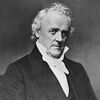
James Buchanan Jr. (April 23, 1791 – June 1, 1868) was an American lawyer and politician who served as the 15th president of the United States from 1857 to 1861. He previously served as secretary of state from 1845 to 1849 and represented Pennsylvania in both houses of the U.S. Congress. He was an advocate for states' rights, particularly regarding slavery, and minimized the role of the federal government preceding the Civil War.
Buchanan was a prominent lawyer in Pennsylvania and won his first election to the state's House of Representatives as a Federalist. He was elected to the U.S. House of Representatives in 1820 and retained that post for five terms, aligning with Andrew Jackson's Democratic Party. Buchanan served as Jackson's minister to Russia in 1832. He won election in 1834 as a U.S. senator from Pennsylvania and continued in that position for 11 years. He was appointed to serve as President James K. Polk's secretary of state in 1845, and eight years later was named as President Franklin Pierce's minister to the United Kingdom.
Beginning in 1844, Buchanan became a regular contender for the Democratic party's presidential nomination. He was finally nominated in 1856, defeating incumbent Franklin Pierce and Senator Stephen A. Douglas at the Democratic National Convention. He benefited from the fact that he had been out of the country, as ambassador in London, and had not been involved in slavery issues. Buchanan and running mate John C. Breckinridge of Kentucky carried every slave state except Maryland, defeating anti-slavery Republican John C. Frémont and Know-Nothing former president Millard Fillmore to win the 1856 presidential election.
As President, Buchanan intervened to assure the Supreme Court’s majority ruling in the pro-slavery decision in the Dred Scott case. He acceded to Southern attempts to engineer Kansas’ entry into the Union as a slave state under the Lecompton Constitution, and angered not only Republicans but also Northern Democrats. Buchanan honored his pledge to serve only one term, and supported Breckinridge's unsuccessful candidacy in the 1860 presidential election. He failed to reconcile the fractured Democratic party amid the grudge against Stephen Douglas, leading to the election of Republican and former Congressman Abraham Lincoln.