
Software attributes


Other attributes
rApps are a function of the Open RAN architecture, and one of two new types of automation applications that are introduced in that architecture. The other automation application, xApps, are near-real time applications, while the rApps are non-real time running. This means the rApps are for automation use cases with more than one second automation loops. These applications act as key enablers of network automation, and act as key enablers for innovation in the Open RAN ecosystem.
As part of the RIC in the RAN, the rApp works to constantly adjust operations to manage and optimize network conditions. It can also provide automation tools for operators to efficiently scale RAN operations in a cloud-native environment. Together with xApps, rApps and RIC applications can provide networks with policy-based guidance.
According to the O-RAN Alliance, the design of the rApps is based on:
- Enrichment information with potential to improve RRM and RAN performance in general, including application-level information, cross-domain information, UE positions, and mobility trajectories
- Use artificial intelligence to optimize control of RAN
- Dynamic optimization of the RAN on a timescale down to seconds
- An open ecosystem of RIC software where third party rApps can offer each other data and insights
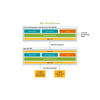
The rApps operate from within the RAN intelligent controller's Service Management and Orchestration (SMO) framework, which functions centrally on the operator's network. From this place in the network, the rApp communicates with its counterpart xApps to provide policy-based guidance. The SMO further supports open software interfaces for rApp communications in an open design which works to stop RAN software vendors from locking down network features.
According to Ericsson, a standardized information model and open interfaces A1, O1, and O2 allow an RIC to have rApps from both incumbents, third parties, and service providers that can together steer any RAN. As well, on a network, an xApp can work with an rApp to send optimization policies and enrichment information capable of targeting an individual user.
All of the data from the RAN and external data available to the rApps are used to train artificial intelligence and machine learning models, which are then communicated to the xApps through the A1 interface for more optimized radio resource management for the RAN performance.
In Ericsson's Intelligent Automation Platform, the company suggests rApps allow software developers to build different applications with different functionalities. This includes use cases for rApps across five main categories:
- Network evolution
- Network deployment
- Network optimization
- Network healing
- Automation and artificial intelligence