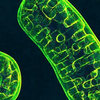
Mitochondrial testing refers to diagnostic testing for mitochondrial disease. Mitochondria are organelles present in all eukaryotic cells that contain a nucleus. Mitochondria perform cellular processes such as calcium homeostasis, iron-sulphur cluster biogenesis, apoptosis, and production of energy in the form of the ATP molecule by oxidative phosphorylation (OXPHOS). Mitochondria have their own genetic material carried on circular DNA molecules, which are present in multiple copies. Genes that encode mitochondrial proteins are found on mitochondrial DNA (mtDNA) as well as on chromosomes in the nucleus. Mitochondrial diseases can arise from genetic mutations on mtDNA or nuclear DNA. For pediatric patients, mutations are more common in nuclear DNA genes; for adult patients, mutations are more common in mtDNA. The mutation may be present at birth or occur later as an age-associated mutation.
Mitochondrial disease is an umbrella term that includes a clinically heterogeneous group of primary mitochondrial disorders. As of 2020, there were 338 known mitochondrial disease genes: 302(89%) encoded by mtDNA and 36 (11%) encoded by nuclear DNA . The tissues and organs most often affected by mitochondrial disease are those with the highest energy demands.
One of the challenges in genetic diagnosis of mitochondrial disease is the lack of genotype-phenotype correlations. Patients with the same genotype or mutation can display different disease symptoms and severity and those with different mutations in different genes can display similar symptoms. Understanding the causal relationship between genetic mutations and observable mitochondrial disease is made difficult by the dynamic distribution of mtDNA variants across the mitochondrial network. Cells have variable numbers of mitochondria, which have variable numbers of mtDNA and the mitochondria undergo fission and fusion.
Unlike nuclear DNA, mtDNA is only inherited from the mother. The multicopy nature of mtDNA means that mutant and wild-type mtDNA molecules coexist, a situation called heteroplasmy. Homoplasmy is when all the mtDNA molecules have the same genotype. Heteroplasmic mutations often have a variable threshold, above which impaired metabolic function or clinical symptoms are noticeable. A familial mtDNA mutation may be below the threshold to cause clinical effects on a mother, but her oocytes may have varying mutation loads, making prediction of recurrence risk in subsequent pregnancies very difficult.
A challenge with diagnosing mitochondrial disease based on DNA sequencing approaches is in finding variants of uncertain significance (VUS) because many variants are not pathogenic. The American College of Medical Genetics (ACMG) provides guidelines to categorize a variant within a 5-tier system, from pathogenic to benign. A variant may require functional validation to show that the variant affects the function of a gene.
mtDNA point mutations have an estimated population prevalence of one in 200. Clinical symptoms range from non-syndromic sensorineural deafness to the neurological condition MELAS (Mitochondrial encephalomyopathy, lactic acidosis, and stroke-like episodes). Clinical symptoms may be present in childhood or later, and mutations may be inherited or de novo.
The three main phenotypes for large-scale mtDNA deletions are chronic progressive external opthalmoplegia (PEO), Kearns-Sayre syndrome (KSS), and Pearson syndrome. These deletions have a population frequency of 1.5 in 100,000. Large-scale mtDNA deletions typically arise sporadically during embryonic development, with low risk of recurrence. Clinically affected women with a large-scale mtDNA deletion have less than 10% risk of transmission, and prenatal testing is informative.
Mutations in nuclear genes can result in defective mtDNA maintenance, transcription, or protein translation or cause depletion in mtDNA copy number or decreased mtDNA genome integrity. These nuclear mutations cause abnormal processes that result in secondary mtDNA mutations.
Mutations in nuclear DNA and mtDNA are associated with deficiencies in the five OXPHOS complexes. While some mutations cause defects isolated to one of the complexes, other mutations cause multiple respiratory chain defects.
Isolated complex I deficiency (NADH dehydrogenase) causes lactic acidosis and may often present with other symptoms, such as cardiomyopathy or leukodystrophy. Mutations in mtDNA or nuclear DNA are associated with Leigh syndrome, in which complex I is defective. Leigh syndrome is a severe neurological disorder.
Isolated complex II (succinate dehydrogenase) is entirely encoded by nuclear DNA, and deficiencies in this complex are rare. Biallelic mutation predominantly affects the central nervous system or heart, such as hypertrophic cardiomyopathy, leukodystrophy, Leigh syndrome and encephalopathy. Heterozygous mutations are associated with increased susceptibility to cancer.
A defect in complex III (ubiquinol-cytochrome c oxidoreductase) due to mutation of the mtDNA gene MTCYB is associated with exercise intolerance. Nuclear-encoded pathogenic mutations present with developmental delay, encephalopathy, lactic acidosis, liver dysfunction, renal tubulopathy, and muscle weakness.
Defects in complex IV (cytochrome c oxidase (COX)) present clinically with heart and CNS conditions. Individuals with Leigh syndrome and Charcot-Marie-Tooth phenotype can have mutations that affect complex IV.
Complex V (ATP synthase) deficiency is associated with lactic acidosis, cardiomyopathy, encephalopathy, and cataracts, with the most common mutation in the nucleus encoded TMEM70 gene.
More than 250 nuclear encoded mitochondrial genes are associated with clinical mitochondrial disease affecting multiple respiratory chain defects. Whole exome sequencing (WES) is a strategy for diagnosis of these types of mitochondrial diseases.
Some mitochondrial diseases do not show evidence of respiratory chain enzyme dysfunction, but show elevated lactate levels, brain changes, and multisystem involvement. Genetic mutations in enzymes of the Krebs cycle (aconitase/ACO2) and cofactor transport (thiamine transporter/SLC19A3) cause non-OXPHOS mitochondrial disease.
DNA sequencing of a handful of candidate genes is the method of choice when a clear clinical syndrome is suspected, and the suspected disease is known to be caused by a small number of potential mutations. For example, Leber hereditary optic neuropathy (LHON) is a disease in which 95% of cases are explained by mutations in the mitochondrially encoded genes, MT-ND1, MT-ND4 and MT-ND6. In less clear cases, frequent reassessment is often required.
Next generation sequencing (NGS) technology is used to perform targeted sequencing of mt-DNA, panel sequencing, whole exome sequencing (WES), and whole-genome sequencing (WGS). NGS is a collection of technologies used to produce millions of short read sequences in a shorter time, at lower cost, and higher throughput than the traditional Sanger DNA sequencing method.
When mt-DNA is sequenced, the entire mt-DNA sequence is screened, and the proportion of mutant mt-DNA relative to wild type (heteroplasmy levels) can be assessed. However mt-DNA heteroplasmy, replication, and copy number vary between tissues. This means that a negative result from an easily accessible sample, such as blood and urine, does not exclude an mt-DNA mutation. Further sampling from other tissue, such as urinary epithelial cells or skeletal muscle, may be needed. Some mt-DNA variants can be difficult to detect or may only be detectible in the tissues that have high energy demands, where the clinical phenotype is seen, such as in progressive external ophthalmoplegia (PEO) and Kearn-Sayre Syndrome where mt-DNA deletions are often detectible in skeletal muscle but not blood. The strategy for adults, because they are more likely than children to have a mutation in mt-DNA than nuclear DNA, is to test mt-DNA in muscle after mt-DNA in blood before moving on to WES or WGS to test nuclear encoded genes.
NGS panels are targeted at genes known to be involved in mitochondrial disease and genes predicted to be involved in mitochondrial functions (candidate genes). NGS panels can analyze hundreds of genes in mt-DNA and nuclear DNA. The targeted approach allows high sequence coverage, meaning a higher number of sequence reads, giving higher confidence in the results. However, since new mitochondrial disease genes are continually being discovered, panels can get out of date.
WES analyses the protein coding regions of the genome including both mt-DNA and nuclear DNA. Estimation of heteroplasmy is similar to mt-DNA NGS. WES is usually performed on blood. Within the field of rare diseases, the diagnostic rate using WES ranges from 24% to 68%, and mitochondrial disease cases have a diagnostic rate of 35% to 70%. WES data may be collected and analyzed as “virtual panels” to investigate variants in a stepwise manner. The downside of this approach compared to NGS panels is the lower coverage.
All regions of the genome are sequenced in WGS. It has been estimated that up to 30% of genetic sequence variants that impact the expression of genes are found outside of the coding region. Transcriptomic studies, which look at sets of RNA transcripts, have found that about 50% of disease mutations that alter RNA splicing are located in intronic regions. Introns are non-coding regions which are removed by RNA splicing to form the final RNA product.
For both WES and WGS, data is captured in an unbiased way and allows for reanalysis of data at a later date, without collecting a new sample. This can be useful as research into mitochondrial disease progresses and leads to the discovery of more mitochondrial disease genes. It is beneficial for WES and WGS to be performed on the patient (proband) and parents as this strengthens the diagnostic rate.
The following are methods used to validate mitochondrial dysfunction and/or show that a VUC disrupts the function of a gene and the function of the mitochondria:
- RNA-sequencing is a transcriptomic approach that can detect when a variant causes aberrant splicing, low expression, or imbalance in allele specific expression
- Proteomic approaches allow quantification of all detectible proteins (approximately 5000-8000 proteins) in a single assay and is performed on patient-derived fibroblast cell lines
- Biomarkers of mitochondrial disease such as levels of lactate, amino acids and organic acids in blood and urine provide diagnostic clues but usually do not give a diagnosis at the gene level
- Metabolomics uses mass spectrometry to capture and quantify up to thousands of small molecule metabolites in a tissue and disease-distinguishing subsets of metabolites are called “metabolite fingerprints”
- Aberrant function of OXPHOS complexes can be assessed by OXPHOS enzyme assays and blue-native electrophoresis (BN-PAGE)
- Measurement of oxygen consumption rate (OCR) uses microscale oxygraphy to assess the bioenergetic state and ability to respond to stress for mitochondria
- Modelling in yeast of mutations is possible since 217 out of 338 disease genes have orthologs in Saccharomyces cerevisiae
- MitoPhen
- MITO2i, with partners MitoCanada, The Lily Foundation, and Thomas Constantine Zachos Scholars, provide innovation grants, fellowships, and scholarships in mitochondrial medicine
- United Mitochondrial Disease Foundation
- GENOMIT is funded by E-Rare and includes partners in Germany, Austria, Italy, France and the USA and establishes national hubs for biochemical and genetic diagnosis
- Mitochondrial Research Guild
- National Organization for Rare Disorders (NORD)
- Muscular Dystrophy Association (MDA): Mitochondrial Myopathies