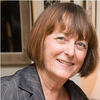

Person attributes


Other attributes

Margaret Anne "Margo" Somerville (maiden name Ganley) is a professor of bioethics in the school of medicine at the University of Notre Dame Australia, joining in 2016. She was previously the founding director of the Centre for Medicine, Ethics and Law at McGill University in Montreal, Canada, where she worked for forty years, and a founding chairperson of the ethics committee of the National Research Council of Canada. She has dedicated her academic career to issues and ideas at the intersection of ethics, healthcare, and law.
Somerville is known internationally for her work in applied ethics, particularly in the areas of medicine and science. Through her research, lectures, speeches, consultations, writings, and interaction with the media, she has examined the impact of science and medicine on society from an ethics standpoint. She has studied and commented on issues such as euthanasia, same-sex marriage, AIDS, biotechnology, abortion, aging populations, and human rights in relation to medical care.
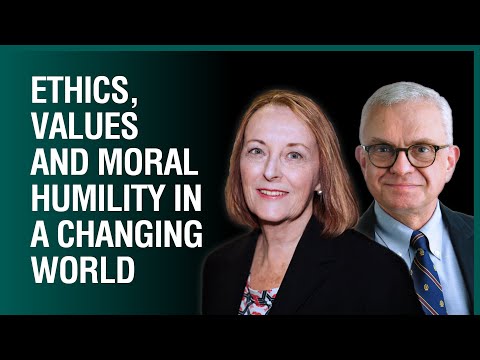
Ethics, values, and moral humility in a changing world | Margaret Somerville | Peter Kurti (May 2022),
Somerville has served as an expert consultant for several organizations, including the United Nations, the World Health Organization, and the Canadian government. She chaired the world's first major international conference on law, medicine, and health policy in Sydney, Australia under the American Society of Law and Medicine in 1986. She was the chair of the National Research Council of Canada’s Human Subject Research Ethics committee and has been a member of numerous other committees in the area of ethics. She has also served on editorial boards, foundation boards, and advisory boards.
In her book Death Talk: The Case Against Euthanasia and Physician-Assisted Suicide, Somerville argues that legalizing euthanasia would cause irreparable harm to society's value of respect for human life. In her lectures and writing, she makes the argument that euthanasia puts the lives of individuals, especially vulnerable people, such as those with disabilities, at risk. She questions where the line is between terminally ill and disabled. She also points out the risk of elder abuse with euthanasia, quoting the statistic that only about 5 percent of people mention pain as a reason for wanting euthanasia, whereas around 48 percent of people give “feeling a burden on others” as a reason. Additionally, she points to risks around suicide prevention if euthanasia became legal. "We must kill the pain and suffering, not the person with pain and suffering," she wrote.
Somerville does not believe that the definition of marriage should change to include same-sex couples. She believes the nature of marriage is the societal institution that represents, symbolizes, and protects the inherently reproductive human relationship. Somerville believes marriage is a compound right affecting both adults and children, including the right to marry and the right to found a family, and that children's rights are the central issue in the debate. She sees marriage as a cultural institution affirming and supporting a biological reality, the naturally procreative relationship between one man and one woman, for the protection and benefit of the children born of that union. She further believes children have a right to a mother and a father and, if at all possible, to know and be reared by their own biological parents within their natural family.
Somerville maintains that she is a supporter of gay rights but believes children’s rights are more important. She also claims same-sex marriage sets dangerous legal precedents for the use of reproductive technologies. She draws a line between marriage and the legal rights of same-sex couples but states that discrimination based on sexual orientation is a grievous wrong and must be prevented. She believes committed same-sex couples have the right to the same financial, legal, and interpersonal protections as committed opposite-sex couples.
Margaret Somerville's family is Roman Catholic. She attended Catholic schools, even though she states her father was an atheist-communist when she was young and would not go into a church. Somerville has stated that despite her religious background, she does not use a religious base in presenting ethical and legal analyses of issues.

Margaret Somerville receives the Queen Elizabeth II Diamond Jubilee Medal (2013)
Margaret Somerville helped launch the McGill Centre for Medicine, Ethics, and Law as the founding director in 1986. She worked there for forty years before retiring and returning to Australia, where she joined the University of Notre Dame Australia in 2016.
Sommerville was the first woman appointed to a professorial chair in the faculty of law at McGill University. She joined McGill’s faculty of law as an assistant professor in 1978, became an associate professor in 1979, and was named the Samuel Gale Professor of Law in 1989. She also held appointments in the faculty of medicine as an associate professor in 1980 and as a full professor from 1984. While at McGill, she gave the 2006 CBC Radio Massey Lectures, which were published in her book The Ethical Imagination: Journeys of the Human Spirit.

Margaret Somerville has published several books:
- Death Talk: The Case Against Euthanasia and Physician-Assisted Suicide (December 2001)
- Bird on an Ethics Wire: Battles about Values in the Culture Wars (December 2015)
- The Ethical Imagination: Journeys of the Human Spirit (December 2006)
- The Ethical Canary: Science, Society and the Human Spirit (December 2004)
- Do We Care? (December 1999)
She is also an author for The Catholic Weekly.
Margaret Somerville was made a member of the Order of Australia in 1990 and a fellow of the Royal Society of Canada in 1991. In 2020, Somerville was made a dame of the Order of St Gregory by Pope Francis. In 2013, she was awarded the Queen Elizabeth II Diamond Jubilee Medal for services to higher education, and in 2014 she received the Jean Echlin Award for Ethics in Palliative Care sponsored by the deVeber Institute for Bioethics and Social Research.
Somerville has also received international awards recognizing her role in the pursuit of ethical issues, including being the first to receive the UNESCO Avicenna Prize for ethics in science in 2004. Somerville has also received the Distinguished Service Award of the American Society of Law and Medicine and the Pax Orbis ex Jure Gold Medal of the World Jurist Association for her support of and dedication to the cause of world peace through law.
In 2006, Somerville was nominated for membership in the Order of Canada by Carol Finlay, a professor at the Toronto School of Theology. Finlay says Somerville was turned down for the honor because she was "too controversial."

Professor Margaret Somerville was awarded a Doctorate of Laws, honoris causa, on May 16, 2013, by the Royal Military College
Somerville has received eight honorary doctorates:
- An honorary doctorate in law from the University of Windsor (1992)
- An honorary doctorate in law from Macquarie University (1993)
- An honorary doctorate in law from St. Francis Xavier University (1996)
- An honorary doctorate in law from University of Waterloo (2004)
- An honorary doctorate in science from Ryerson University (2006)
- An honorary doctorate in humane letters from Mount Saint Vincent University (2009)
- An honorary doctorate of sacred letters from St. Mark’s College, British Columbia (2010)
- An honorary doctorate in law from Royal Military College in Kingston, Ontario (2013)
The Ryerson University honor was met with protests from both faculty and students opposing her views on same-sex marriage.
Margaret Somerville graduated from Mercedes College (a primary and secondary school) in 1959. She then graduated from the University of Adelaide in pharmacy in 1963 and the University of Sydney in law in 1973. She moved to Canada in 1975 to continue her education and received her Ph.D. in civil law from McGill University in 1978.
Margaret Somerville was born Margaret Anne Ganley in Adelaide, Australia, on April 13, 1942. Her father was George Patrick Ganley, and her mother was Gertrude Honora Rowe Ganley. She married Peter Somerville in 1966. Having lived in both Canada and Australia where she grew up, she considers both countries home. Her ancestors are from South Australia, and she had a brother, Bob, who died of cancer in 2004.