
Person attributes


Other attributes


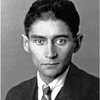
Franz Kafka was born in Prague on the 13th of July, 1883, into an upper middle-class family of German Jews. He was the son of Julie Löwy and Hermann Kafka, a merchant. Kafka was the eldest child in the family. He had three sisters, Gabriele (1889–1941), Valerie (1890–1942), and Ottilie (1892–1943), and two brothers, Georg (1885–1886) and Heindrich (1887–1888), both of whom died in infancy. Out of his three sisters, Ottilie (called Ottla by her family) was the closest to him. It is at her house in Zürau that Kafka convalesced in 1917-18 after being diagnosed with tuberculosis. Kafka was not particularly close to his mother and famously had an extremely strained relationship with his father, a subject he wrote about in a forty-seven-page letter to him that never reached its addressee.

Cropped photograph of Kafka and a dog
In 1901, after attending the Chemistry Course for two weeks and Germanic studies for six months, Kafka decided to transfer to the Faculty of Law, considered to be less demanding. He acquired his degree at the German University in Prague, on the 18th of June, l906. At about that time, the early signs of Kafka's lung tuberculosis became apparent, which led to his premature death by the time he was forty-one years old.
Two years after receiving his degree, he was offered a job at the Arbeiter-Unfall Versicherungs Anstalt (Institute of Insurance for Accidents at Work, at the Prague Office of “Assicurazioni di Trieste”), which allowed him to be free in the afternoon and dedicate his time to writing. However, because of fatigue, he spent the afternoons resting and instead devoted himself to his literary pursuits at night. Shortly thereafter, he began to suffer from insomnia and became intolerant to noise. He also developed furuncolosis, asthenia, constipation, and several neuro-vegetative disorders.
In 1912, he wrote to his friend Max Brod, telling him he had come very close to suicide. In 1909 and 1913, he spent some time in Riva del Garda in a clinic well-known for the treatment of neuro-asthenia, assimilation disorders, and heart and lung diseases. A few years later, his emotional state went completely to pieces—he suffered from severe and frequent headaches and lived in a state of deep depression, with a tendency toward self-destructive behavior. On August 9th, l917, his tuberculosis worsened, becoming manifest with haemoptysis. Kafka commented on his condition as follows:
It was about 4 o’clock in the morning. I woke up and was surprised by the strange amount of saliva in my mouth, I spat it out then decided to turn on the light. That is how it began. Crleni, I don’t know if that is how it’s written, but it is a suitable expression for this clearing of the throat. I thought it was never going to finish. How was I going to stop this fountain if I had never started it (…) This, then is the situation of this spiritual disease, tuberculosis.

Photograph of Kafka and Felice Bauer
In August 1912, Kafka met Felice Bauer, with whom he corresponded frequently until October 1917, by which time Kafka had produced nearly 550 pages of letters. They were twice engaged, but both times the engagement was broken off. Some of Kafka's most significant works originated during this period: The Trial, The Metamorphosis, and "The Judgement."
In 1919, he met Julie Wohryzeck, but left her after only a few months when he met Milena Jesenska. From December 20, 1920 until August 27, 1921 he stayed in the sanatorium "Villa Tatra" from in Tatranské Matliare, the High Tatras, to treat his tuberculosis. Nearly two years after his return to Prague, Kafka met Dora Dyamant on the 16th of June, 1923, and went to Berlin to live with her.
In February 1924, his health deteriorated severely and he was taken to the Wienerwald sanatorium, 40 km south-west of Vienna, where he spent one week. The doctors at the sanatorium suspected laryngeal tuberculosis, but since they did not have the means to treat the disease, Kafka was transferred to Professor Hajek’s laryngology clinic in Vienna, where laryngeal tuberculosis was officially diagnosed. At that point, Kafka’s larynx was so swollen that he could not eat or drink.
Because the atmosphere at the clinic was deemed too depressing for the author, Dora and Robert Klopstock eventually obtained his release into home care. However, Dora soon found him a new place of treatment in Kierling, where he was to spend the last six weeks of his life. Kafka's friends, particularly Felix Weltsch, sent one of Vienna’s best lung specialists, Prof. Heinrich Neumann, who stated that Kafka’s condition was incurable. By that time, the writer could only communicate by means of notes that have been preserved and serve as proof of his mental clarity up to his death.

Kinetic sculpture of Kafka's head in Prague by Czech artist David Cerný
At that time, aetiological treatment for the Koch bacteria did not exist, and the only possibility was palliative treatment. It was decided to proceed with cervical infiltrations of the superior laryngeal nerve with a solution of 1% cocaine, plus alcohol (60-80%) and possibly 1% Stovaine. The infiltrations had a beneficial effect on the symptoms, but had to be repeated every eight to ten days. Kafka's general conditions, however, were so poor that after a few months, on the 3rd of June, 1924, he died.
Kafka’s literary work includes short stories and many fragments of them, three unfinished novels, diaries, and correspondence. Kafka agreed to publish only a few of his works during his lifetime, which he did chiefly at the insistence of his friends. He burned many of his manuscripts in the months prior to his death and demanded for the rest to be destroyed on his behalf. Kafka explicitly expressed his wishes to have his manuscripts burned in two letters addressed to a friend of his, Max Brod, which were never sent.
Brod ignored his wishes and facilitated the posthumous publication of his works, initially by the Schocken Publishers in Berlin, then by the Mercy Publishers in Prague, and later, expanded by new findings and deciphered fragments, by the Schocken Publishers in New York and concurrently by the S. Fischer Publishing House in Frankfurt, Germany. Brod acted out of a twofold loyalty: to the public, on account of the literary and cultural value of the manuscripts, and to Kafka himself, since Brod believed that his true wish was to have the work published.
Novels and novellas
Short stories and parables (incomplete list)
The word "Kafkaesque" is used to describe any thing or event relating to or suggestive of Franz Kafka or his writings; especially anything having a nightmarishly complex, bizarre, or illogical quality, as defined by the Merriam-Webster dictionary.
W. H. Auden, the British-American poet, praised Kafka's literary influence, calling him "the author who comes nearest to bearing the same kind of relation to our age as Dante, Shakespeare, and Goethe bore to theirs”.