
Description
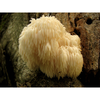
The fruit body is up to 20 cm in size and weighs up to 1.5 kg, rounded or irregular in shape, from white to beige in color. The hymenophore is characteristic - spiny, has the appearance of thin needles hanging down, which makes the mushroom look like a hedgehog. The flesh is whitish, fleshy. It turns yellow when it dries. The spore powder is white.
Ecology and distribution
Habitats: on the trunks of still living or fallen deciduous trees (oak, beech, birch), most often in places of bark fracture or broken branches.
It is found in the Amur Region, Khabarovsk Krai, Primorsky Krai, in the north of China, in the foothills of the Caucasus and in the Crimea.
Rare, listed in the Red Book of Primorsky Krai and the Jewish AO; there is no Red Book of the Khabarovsk Territory
Season: from the beginning of August to October.
It is grown artificially, sawdust or straw substrates are used for this.
Nutritional value and medical use
It is used both in the food industry (tastes like shrimp meat) and in medicine (as an immunity stimulant).
In folk medicine, it is used to treat chronic gastritis, cancer of the esophagus, stomach, leukemia. In oriental medicine, it is used as an immunostimulator, stimulator of growth and regeneration of nerve cell processes, antiseptic. In some cases, it is used to treat atrophic gastritis. Erinacin, an integral part of the extract of the mushroom Hericium erinaceus, due to its distant chemical affinity with the psilocybin molecule, can have a stimulating and trophic effect on the nervous system. There are a number of publications where its ability to stimulate the level of catecholamines and neuronal growth factor (NGF) has been experimentally proven (Mari Shimbo, 2005, Bing Ji Ma, 2010).
A number of clinical studies, especially by Asian authors, suggest the effect of erinacin in erinaceus on the sprouting of neurons, the resumption of connections between brain cells after a stroke or traumatic brain injury and the restoration of cognitive function (K.Mori, 2009). There is an increase in general tone, mood and motivation for treatment (Aloe L., 2015). There are data on the reduction of motor neurological deficit, improvement of self-service and social adaptation after a stroke, which require further clinical study.


