Other attributes
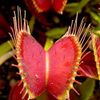
The Venus flytrap grows to about 15 cm wide. The leaves are arranged in a rosette around an underground stem. The plant has four to seven leaves, each of which is a trap. The trap consists of two opposite petals with spikes along the outer edges. The flycatcher grows low to the ground, which allows insects to easily crawl into the trap. The flowers are small, star-shaped and located at the ends of the stems. The plant flowers in May-June and then produces small, black seeds. Life expectancy is up to seven years.

Venus flytrap

Inside each trap there are small hairs that act as sensors. A one-time touch of the antennae will not give any effect. But as soon as the insect makes two consecutive touches to two different hairs, the trap closes.
After the insect is trapped, the Venus flytrap releases digestive enzymes and dissolves its prey within 2 weeks. Then it opens again, waiting for the next victim. Each trap is capable of catching up to seven prey items in its lifetime.
In nature, the Venus flytrap grows in the pine savannas and wetlands of the states of North and South Carolina, USA. It thrives in waterlogged, nitrogen-deficient and acidic soils. The Venus flytrap prefers open, sunny areas with moist soil.