Other attributes
The Streisand effect is a phenomenon that occurs when an attempt to hide, remove, or censor information has the unintended consequence of increasing awareness of that information, often via the Internet.
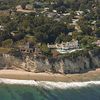
It is named after American singer Barbra Streisand, whose attempt to suppress the California Coastal Records Project’s photograph of her residence in Malibu, California, taken to document California coastal erosion, inadvertently drew greater attention to the photograph in 2003.
Attempts to suppress information are often made through cease-and-desist letters, but instead of being suppressed, the information receives extensive publicity, as well as media extensions such as videos and spoof songs, which can be mirrored on the Internet or distributed on file-sharing networks.
The Streisand effect is an example of psychological reactance, wherein once people are aware that some information is being kept from them, they are significantly more motivated to access and spread that information.
In some cases, taking out a legal injunction prohibiting something from being published leads to increased publicity.
In November 2007, Tunisia blocked access to YouTube and Dailymotion after material was posted depicting Tunisian political prisoners. Activists and their supporters then started to link the location of then-President Zine El Abidine Ben Ali's palace on Google Earth to videos about civil liberties in general. The Economist said this "turned a low-key human-rights story into a fashionable global campaign".
The French intelligence agency DCRI's deletion of the French-language Wikipedia article about the military radio station of Pierre-sur-Haute[19] resulted in the article temporarily becoming the most-viewed page on the French Wikipedia.
A 2013 libel suit by Theodore Katsanevas against a Greek Wikipedia editor resulted in members of the project bringing the story to the attention of journalists.
The government of South Africa stated their intention to ban the 2017 book The President's Keepers, detailing corruption within the government of then-President Jacob Zuma. This caused sales of the book to spike dramatically, causing the book to sell out within 24 hours before the ban was to be put into effect. This made the book a national best seller and led to multiple reprints.
In February 2018, Anne Applebaum wrote in The Washington Post about the Polish Holocaust law, which would have criminalized blaming Poles for the Holocaust. She argued that the Streisand effect would draw more attention to aspects of history that the Polish government preferred to suppress. The legislation is part of the historical policy of the Law and Justice party which seeks to present a narrative of ethnic Poles exclusively as victims and heroes. The law met with widespread international criticism, as it was seen as an infringement on freedom of expression and on academic freedom, and as a barrier to open discussion on Polish collaborationism, in what has been described as "the biggest diplomatic crisis in [Poland's] recent history".
A 2018 study of millions of individual responses of Chinese social media users found that sudden censorship of information by the Chinese government and its affiliates often led to mass backlashes, including newfound popularity of VPNs and the subsequent reviewing of entire topic lists on which censored subjects appear. Other researchers found that the backlash tended to result in permanent changes to political attitudes and behaviors.
A 2019 study of political imprisonment by the government of Saudi Arabia found that while the incarceration tended to deter individual dissidents from further dissent, it strongly emboldened their social media followers, led to a sharp increase in calls for political reform, and resulted in an increase in online dissent and physical in-person protests overall, including criticism of the ruling family and calls for regime change.
Such repression draws public attention to the imprisoned dissidents and their causes, and did not deter other prominent figures in Saudi Arabia from continuing to dissent online.


