Other attributes
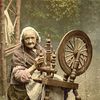
There were two types of spinning wheels - with a blade and with a comb. They differed not only in appearance and technology of thread production. They made spinning wheels from wood. There were solid wood spinning wheels and those where each individual part was made from a different type of wood. For example, the spindle was carved from birch wood, the bottoms were aspen or linden, and the combs were carved from hardwood.
Spinning and weaving were exclusively women's work. The process of making a thread was extremely laborious and slow, so girls learned the art of spinning threads from childhood.
Over time, the need for downy products increased and self-spinning wheels came to the aid of the spinners. For the first time self-spinning wheels appeared in Russia in the 15th century. For several centuries, spinning wheels have undergone many improvements, are widely used in our lives and are indispensable helpers for our down knitters.