
Person attributes


Other attributes
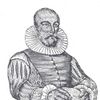
Pedro Nunes was a Portuguese scholar who worked in geometry, spherical trigonometry, algebra, geography, physics, and cosmology. He was a chief figure in Portuguese nautical science and worked as a royal cosmographer throughout his career, mapping and training Portuguese navigators. He wrote under the name of Petro Nonius Salaciensis, his surname with an added reference to his place of birth, Alacer do Sal, which was named Salacia by the Romans. Pedro Nunes worked as a royal tutor and taught at University of Lisbon, later to become University of Coimbra. Though he is primarily remembered for his works with mathematics and nautical sciences, Pedro Nunes had also been a professor of philosophy, teaching moral philosophy, metaphysics, and logic
Pedro Nunes was born in 1503 in Alcer do Sal, Portugal; not much is known about Nunes's family or childhood. In 1517, he moved to University of Salamanca, where he went on to earn a Bachelors degree in Medicine (1923). The same year of his graduation he married D Guiomar Areas; they would go on to have six children together: Apolónio, Pedro, Briolanja, Francisca, Isabel, and Guiomar.
Nunes returned to Portugal in 1527 and worked as a tutor for Prince Luís (1506-1555), the brother to the king of Portugal, João o Piedoso. Nunes remained in his tutoring position until 1531. Nunes taught navigation skills to Martim Afonso de Sousa, leader of the first colonizing expedition to Brazil (1530), as well as D. João de Castro the same year that he began his court tutoring position.
In 1529, Nunes was appointed the "Cosmographer of the Kingdom of Portugal". It was at this time that Nunes began teaching at the University of Lisbon, first in a temporary position for moral philosphy, then teaching logic (1530) and metaphysics (1532). During his time at the University, Nunes had been studying medicine and on March 3, 1532 he received his medical doctorate.
In 1937, when University of Lisbon moved to Coimbra, Nunes moved with it and in 1544 he was appointed the chair of mathematics. He retired from the university in 1562. Nunes was appointed Chief Royal Cosmographer on December 22, 1547. He held this title till his death.
Pedro Nunes is best known for his contributions to navigation, primarily his investigation of what he called the rhumb line (1550), which is the curve that a ship will follow if it always follows the same compass setting. It allowed these curves to be mapped as a straight line. The rhumb line was later named the loxodrome by Willebrord Snell.He is also accredited with the invention of the nonius, an improvement to the astrolabe.
He published some works that were lost; he is credited with writing the following:
- Tratado da sphera com a Theorica do Sol de da Lua (1537)
- Tratado em defensam da carta de marear (Treatise Defending the Sea Chart), (1537)
- Tratado sobre certas dúvidas da navegação (Treatise about some Navigational Doubts), (1537)
- De crepusculis (About the Twilight), (1542)
- De erratis Orontii Finei (About the Errors of Orontii Finei), (1546)
- Petri Nonii Salaciensis Opera, (1566). Expanded, corrected and reedited as De arte adque ratione navigandi in 1573
- Livro de algebra en arithmetica y geometria (Book of Algebra in Arithmetics and Geometry), (1567)