
Name
The guyot is also known as Caiwei or Pallada after the Russian frigate Pallada.
Geomorphology
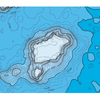
Pako Guyot reaches a depth of 1,350 metres (4,430 ft).[3] It has dimensions of 40 by 65 kilometres (25 mi × 40 mi) and features a summit plateau 2,056 square kilometres (794 sq mi) wide[4] at a depth of 1,500–1,650 metres (4,920–5,410 ft)[3] with a shape corresponding to an irregular rectangle-triangle.[2] With an area of 13,680 square kilometres (5,280 sq mi), Pako Guyot is the third-largest guyot on Earth, only behind Koko Seamount and Suiko Seamount. The summit plateau is covered by sediments 25–100 metres (82–328 ft) thick[6] including foraminiferal ooze, while the flanks feature small-scale features such as depressions, ridges and trenches.[3] Former reefs occur on the seamount[7] and during the Cretaceous and Eocene left mudstones and limestones on the seamount. Later, pelagic limestones were emplaced on them. A 65 square kilometres (25 sq mi) large area on the northwestern corner of Pako Guyot's summit plateau is free of sediments.


