
Person attributes


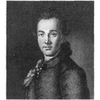
Matvey Fyodorovich Kazakov (1738 – 7 November 1812) was a Russian Neoclassical architect. Kazakov was one of the most influential Muscovite architects during the reign of Catherine II, completing numerous private residences, two royal palaces, two hospitals, Moscow University, and the Kremlin Senate. Most of his works were destroyed by the Fire of 1812; they were later rebuilt with various degrees of alteration.
Early years
Kazakov was born in Moscow. His father was a government clerk and a former serf who earned his freedom by serving in the Navy. When Kazakov was twelve years old, he joined the architectural school of Dmitry Ukhtomsky, where he worked and studied until 1760. After a devastating fire in Tver in 1761, Kazakov was assigned to rebuild Tver as a junior architect under P.R. Nikitin, and dedicated seven years to this project. The Travel, or Transit, Palace was completed by Kazakov in 1767.
Shadow of Bazhenov
In 1768, Kazakov joined Vasili Bazhenov’s Great Kremlin Palace project. Both architects were the same age—30 years old—but had very different educations. Bazhenov received a formal European education, while Kazakov learned his trade repairing Kremlin relics and never traveled far from Moscow. His enormous utopian project dragged slowly until its dissolution in 1774. By this time, Kazakov was already working on private orders; architects were in high demand after a 1773 fire razed the wealthy Tverskaya Street.
Kazakov stepped out of Bazhenov’s shadow, receiving his first personal royal commission to design a temporary Prechistenka palace for Catherine II. This job brought him a Crown Architect’s license (1775) and a steady flow of private orders. In 1775, Kazakov and Bazhenov worked together again on temporary royal pavilions for the celebration of peace with Turkey. These Gothic structures inspired Catherine II to award the architects two independent commissions in Gothic style—Tsaritsyno Palace to Bazhenov and Petrovsky Palace to Kazakov.
Death and legacy
In 1806, the ailing Kazakov finally retired from practice. After the Battle of Borodino, Kazakov's children evacuated him to Ryazan. The city burned down in September 1812. Relatives tried to shield him from the news about the fire of Moscow, but eventually the news reached him. Kazakov died at Ryazan on October 26, 1812 (Old Style) and was buried in Ryazan's Trinity Monastery.
Kazakov had three sons, all trained in architecture. Pavel and Vasily died young; Matvey survived his father and died at age 39.
Kazakov's most successful students and assistants were Joseph Bové, Ivan Yegotov (1756–1814), Fedor Sokolov (1752–1824), and Alexei Bakarev (1762–1817).


