
Other attributes
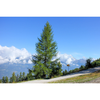
Listvenitsa is the most common breed of coniferous trees in Russia, the most popular building material and a source of priceless components for the creation of medicines – all this is about larch. It has a lot of advantages, thanks to which it remains in demand even in such diametrically opposite spheres of human activity as medicine and construction.
Description of the breed
In order to understand why larch has gained great popularity both in the construction and medical fields, it is necessary to understand all the features of the breed. We will talk more about them later.
Botanical description
Larch is a coniferous tree, but at the same time it has one interesting property that distinguishes it from other representatives of the family. With the arrival of autumn, the tree sheds its needles before the onset of spring, and it tolerates the cold very easily. Under favorable conditions, larch grows up to 50 meters in height, while the trunk diameter can reach
Biological properties
Larch owes its impressive level of prevalence, first of all, to an incredibly successful combination of biological properties. For example, a tree has a powerful root system that allows it to feel great even in conditions of high humidity (in swamps and seas) or in a cold climate (with permafrost close to it). However, the ideal option is still sandy loam soils or loam. At the same time, larch is an extremely light-loving plant and will simply wither in the shade, but in favorable conditions it can add from 50 to 100 cm in height per year, often suppressing other breeds in the process.
Distribution
The area of larch growth is quite wide and extends from the mixed forests of Western and Northern Europe to the Carpathians. In Russia, it can most often be found in Siberia or in the Far East, from the south of Primorye to the northernmost borders of the distribution of trees. And it is on the territory of Russia that
Differences from other coniferous plants
Larch is a unique tree of its kind and is markedly different from other coniferous plants, for example, from pine, spruce or fir. The most fundamental difference is, of course, the shedding of needles for the winter period, while the crown of the tree, especially if it is young, is quite transparent, whereas in pine and fir it is very thick and truly luxurious. In addition, larch has a very powerful trunk – in some cases its diameter can reach 1.8 meters – other coniferous trees cannot boast of such volumes. The bark of the tree is quite light, and the cones are distinguished by a very elegant rounded shape and in winter remain virtually the only decoration of the plant.
Types and varieties of larch
Scientists identify more than 20 varieties of larch, while all species are very similar in appearance, only specialists can accurately distinguish them. The most popular are the four most common varieties of larch: European, Siberian
European (common)
larch species are widely distributed - mixed forests of Central and Western Europe, in particular the slopes of the Alps and the Carpathians. It needs bright sun and dry soil, tolerates the neighborhood with trees such as European spruce and cedar pine, white fir and forest beech.
European larch is considered the largest species – the height of the tree can reach 50 meters (especially often such impressive specimens are found in the Alps), and the thickness of the trunk is often 2 meters. In the conditions of the Russian climate, the height indicators are more modest, the tallest specimens are usually no higher than 25 meters. The crown has a conical shape, and the needles are very delicate and completely non-prickly. The flowering periods of the tree begin at the age of 15-20 years, while the flowers appear only in May. By autumn, cones ripen on European larch, but they will open only with the onset of spring. Young cones have an interesting bright red shade, which resembles miniature roses, mature ones are colored