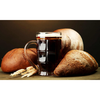


Kvass is a traditional Slavic and Baltic sour drink, which is prepared on the basis of fermentation from flour and malt (rye, barley) or from dry rye bread, sometimes with the addition of fragrant herbs, honey, honeycombs; it is also prepared from beets, fruits, berries. Kvass is used not only as a drink, but also is the basis for classic cold chowder of Russian cuisine (okroshka, botvinya, etc.).
Until the XII century, kvass in Russia was stronger and thicker than modern beer. Kvass was considered an alcoholic drink, and the analogue of the word "drunkard" in the language of that time was the word "kvasnik" (the slang term "kvass", meaning "to get drunk", has reached our time). Since the XII century, kvass has been distinguished as a sour low-alcohol drink and kvass as a highly intoxicating drink. Intoxicating kvass began to be called "created", that is, cooked, and not arbitrarily sour, like ordinary kvass.
The Upper Lusatian word kwas, "holiday, wedding feast", and the Old Slovakian kvas, "feast, treat, festivities", indicate that kvass used to be the main intoxicating drink at holidays and weddings.
According to the classification of the Beer Judge Certification Program, which trains and certifies judges for beer tasting competitions, kvass is beer, and belongs to the category of "historical, traditional, local beer" (historical, traditional or indigenous beers)[6]. In Russia, Slavic and Baltic countries, kvass is separated from beer and is considered an independent drink; typical distinguishing criteria are relatively low alcohol content, double fermentation (alcoholic and lactic acid), relatively high amount of sugars (incomplete fermentation).
Kvass is made from grain products: in industrial conditions - from malt, flour, at home - also from malt and flour, and from bread, crackers. To start alcoholic fermentation, raisins are added to self-made kvass, less often other fruits and berries, since yeast is contained on their surface.
It has a pleasant refreshing taste, improves metabolism, has a beneficial effect on the cardiovascular system. Kvass has excellent taste qualities; it quenches thirst due to the acids contained in it — lactic and partly acetic; has a high energy value, promotes digestion due to the carbon dioxide contained in it, which facilitates the digestion of food, its absorption and increases appetite. It also contains vitamins, free amino acids, sugars and trace elements. Kvass contains a lot of vitamins B1 and E, which explains its beneficial properties. Kvass also contains valuable enzymes (from Lat. fermentum — "sourdough").
Alcohol content: from 0.7% vol. to 2.6% vol. Kvass is not recommended for use with cirrhosis of the liver, gastritis, hypertension, pregnancy and lactation.
Yeast-free kvass, in turn, is useful for both adults and children. This kvass is made from rye flour and fermented rye malt on a specially prepared natural starter culture, which is grown from whole grain flour for several days.
Kvass, as a product of lactic acid fermentation, has an effect on the body in many ways similar to products such as kefir, yogurt, acidophilus, koumiss. It regulates the activity of the gastrointestinal tract and cardiovascular system, improves metabolism, prevents the development of pathogens, raises the tone. Kvass can even be used as a staple food: in the hungry years, it saved people from exhaustion


