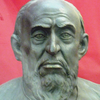

Person attributes


Ivan the Terrible and His Son Ivan. 1885 painting by Ilya Repin
Ivan was the first Moscow ruler born after its independence. The son of Vasili III, the Rurikid ruler of the Grand Duchy of Moscow, he was appointed grand prince after his father's death when he was three years old. A group of reformers known as the "Chosen Council" united around the young Ivan, declaring him tsar (emperor) of All Rus' in 1547 at the age of 16 and establishing the Tsardom of Russia with Moscow as the predominant state. Ivan's reign was characterised by Russia's transformation from a medieval state to an empire under the tsar but at an immense cost to its people and its broader, long-term economy.
During his youth, there was a conquest of the khanates of Kazan and Astrakhan. After he had consolidated his power, Ivan got rid of the advisers from the "Chosen Council" and triggered the Livonian War, which ravaged Russia and resulted in the loss of Livonia and Ingria but allowed him to establish greater autocratic control over Russia's nobility, which he violently purged with the Oprichnina. The later years of Ivan's reign were marked by the Massacre of Novgorod and the burning of Moscow by Tatars.
Contemporary sources present disparate accounts of Ivan's complex personality. He was described as intelligent and devout but also prone to paranoia, rage, and episodic outbreaks of mental instability that increased with age.[6][7][8] In one fit of anger, he murdered his eldest son and heir, Ivan Ivanovich, and he might also have caused the miscarriage of the latter's unborn child. This left his younger son, the politically ineffectual Feodor Ivanovich, to inherit the throne, a man whose rule and subsequent childless death directly led to the end of the Rurikid dynasty and the beginning of the Time of Troubles.

Portrait of Ivan IV by Viktor Vasnetsov, 1897 (Tretyakov Gallery, Moscow)
In 1568, Grand Vizier Sokollu Mehmet Paşa, who was the real power in the administration of the Ottoman Empire under Sultan Selim, initiated the first encounter between the Ottoman Empire and its future northern rival. The results presaged the many disasters to come. A plan to unite the Volga and Don by a canal was detailed in Constantinople. In the summer of 1569, a large force under Kasim Paşa of 1,500 Janissaries, 2,000 Spakhs and a few thousand Azaps and Akıncıs were sent to lay siege to Astrakhan and to begin the canal works while an Ottoman fleet besieged Azov.
In early 1570, Ivan's ambassadors concluded a treaty at Constantinople that restored friendly relations between the Sultan and the Tsar.
In 1558, Ivan launched the Livonian War in an attempt to gain access to the Baltic Sea and its major trade routes. The war ultimately proved unsuccessful and stretched on for 24 years and engaging the Kingdom of Sweden, the Grand Duchy of Lithuania, the Polish–Lithuanian Commonwealth and the Teutonic Knights of Livonia. The prolonged war had nearly destroyed the economy, and the Oprichnina had thoroughly disrupted the government. Meanwhile, the Union of Lublin had united the Grand Duchy of Lithuania and Kingdom of Poland, and the Polish-Lithuanian Commonwealth acquired an energetic leader, Stefan Batory, who was supported by Russia's southern enemy, the Ottoman Empire. Ivan's realm was being squeezed by two of the time's great powers.
Unlike Sweden and Poland, Frederick II of Denmark had trouble continuing the fight against Muscovy. He came to an agreement with John III of Sweden in 1580 to transfer the Danish titles of Livonia to John III. Muscovy recognised Polish–Lithuanian control of Livonia only in 1582. After Magnus von Lyffland, the brother of Fredrick II and a former ally of Ivan, died in 1583, Poland invaded his territories in the Duchy of Courland, and Frederick II decided to sell his rights of inheritance. Except for the island of Saaremaa, Denmark had left Livonia by 1585.
The English word terrible is usually used to translate the Russian word Грозный in Ivan's nickname, but that is a somewhat-archaic translation. The Russian word Грозный reflects the older English usage of terrible as in "inspiring fear or terror; dangerous; powerful; formidable". It does not convey the more modern connotations of English terrible such as "defective" or "evil". Vladimir Dal defines grozny specifically in archaic usage and as an epithet for tsars: "courageous, magnificent, magisterial and keeping enemies in fear, but people in obedience". Other translations have also been suggested by modern scholars, including formidable.
Ivan died from a stroke while he was playing chess with Bogdan Belsky on 28 March [O.S. 18 March] 1584. Upon Ivan's death, the Russian throne was left to his unfit middle son, Feodor, a weak-minded figure. Feodor died childless in 1598, which ushered in the Time of Troubles.


