
Person attributes


Other attributes

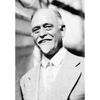
Irving Fisher, (born February 27, 1867, Saugerties, New York, U.S.—died April 29, 1947, New Haven, Connecticut), American economist best known for his work in the field of capital theory. He also contributed to the development of modern monetary theory.
Fisher was educated at Yale University (B.A., 1888; Ph.D., 1891), where he remained to teach mathematics (1892–95) and economics (1895–1935). In The Purchasing Power of Money (1911), he developed the modern concept of the relationship between changes in the money supply and changes in general price levels. From 1912 to 1935, Fisher produced a total of 331 documents—including speeches, letters to newspapers, articles, reports to governmental bodies, circulars, and books—that described his plan for a dollar capable of sustaining a constant purchasing power (also known as the “compensated” dollar or “commodity” dollar). Fisher believed the dollar should be defined not by the weight of gold but by the value of gold; this value could be determined by an index number based on the price of a given set of goods.
Fisher’s crusading spirit led him to embrace many reformist causes, including health, eugenics, conservation, prohibition, and the League of Nations. He also proved himself an able businessman, earning a fortune in 1910 by marketing a card-index file system he had devised. Moreover, in 1926 he was one of the founders of Remington Rand, Inc., and he served on its board of directors until his death.
Fisher’s books and reports represent some of the clearest writing in the discipline of economics; he had the intellect to use mathematics in virtually all his theories and the good sense to introduce it only after he had clearly explained the central principles. Graduate students in economics are able to read hundreds of pages of his book The Theory of Interest in one sitting, which is unheard of with other technical economics writing.
Fisher believed that interest rates result from the interaction of two forces: the “time preference” that people have for immediate income, and the investment opportunity principle (simply put, the possibility that income invested now will yield greater income later). He defined capital as any asset that produces a flow of income over time and showed that its value can be based on the present value of the net income generated by that asset. This is still the way economists view capital and income today.
Fisher also opposed conventional income taxation and favoured instead a tax on consumption. The income tax system, he wrote, taxes individual investors twice: once when they earn the money and again when their savings generate taxable income. Thus, argued Fisher, an income tax is biased against saving and in favour of consumption. He wished to eliminate this bias, and his case is still made by economists today who wish to substitute consumption taxes for income taxes.
Among more than two dozen books, his most important, in addition to Purchasing Power, were Mathematical Investigations in the Theory of Value and Prices (1892), The Nature of Capital and Income (1906), The Making of Index Numbers (1922), The Theory of Interest (1930), and Booms and Depressions (1932).