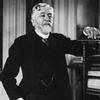

Person attributes


Alexandre Gustave Eiffel (born Bonickhausen dit Eiffel; /ˈaɪfəl/; French pronunciation: [efɛl]; 15 December 1832 – 27 December 1923) was a French civil engineer. A graduate of École Centrale des Arts et Manufactures, he made his name with various bridges for the French railway network, most famously the Garabit viaduct. He is best known for the world-famous Eiffel Tower, designed by his company and built for the 1889 Universal Exposition in Paris, and his contribution to building the Statue of Liberty in New York. After his retirement from engineering, Eiffel focused on research into meteorology and aerodynamics, making significant contributions in both fields.
Early life
Alexandre Gustave Eiffel was born in France, in the Côte-d'Or, the first child of Catherine-Mélanie (née Moneuse) and Alexandre Bonickhausen dit Eiffel. He was a descendant of Marguerite Frédérique (née Lideriz) and Jean-René Bönickhausen and who had emigrated from the German town of Marmagen and settled in Paris at the beginning of the 18th century. The family adopted the name Eiffel as a reference to the Eifel mountains in the region from which they had come. Although the family always used the name Eiffel, Gustave's name was registered at birth as Bonickhausen dit Eiffel, and was not formally changed to Eiffel until 1880.
At the time of Gustave's birth his father, an ex-soldier, was working as an administrator for the French Army; but shortly after his birth his mother expanded a charcoal business she had inherited from her parents to include a coal-distribution business, and soon afterwards his father gave up his job to assist her. Due to his mother's business commitments, Gustave spent his childhood living with his grandmother, but nevertheless remained close to his mother, who was to remain an influential figure until her death in 1878. The business was successful enough for Catherine Eiffel to sell it in 1843 and retire on the proceeds. Eiffel was not a studious child, and thought his classes at the Lycée Royal in Dijon boring and a waste of time, although in his last two years, influenced by his teachers for history and literature, he began to study seriously, and he gained his baccalauréats in humanities and science. An important part in his education was played by his uncle, Jean-Baptiste Mollerat, who had invented a process for distilling vinegar and had a large chemical works near Dijon, and one of his uncle's friends, the chemist Michel Perret. Both men spent a lot of time with the young Eiffel, teaching him about everything from chemistry and mining to theology and philosophy.
Eiffel went on to attend the Collège Sainte-Barbe in Paris, to prepare for the difficult entrance exams set by engineering colleges in France, and qualified for entry to two of the most prestigious schools – École polytechnique and École Centrale des Arts et Manufactures – and ultimately entered the latter. During his second year he chose to specialize in chemistry, and graduated ranking at 13th place out of 80 candidates in 1855. This was the year that Paris hosted the second World's Fair, and Eiffel was bought a season ticket by his mother.
The Eiffel Tower
The design of the Eiffel Tower was originated by Maurice Koechlin and Emile Nouguier, who had discussed ideas for a centrepiece for the 1889 Exposition Universelle. In May 1884 Koechlin, working at his home, made an outline drawing of their scheme, described by him as "a great pylon, consisting of four lattice girders standing apart at the base and coming together at the top, joined together by metal trusses at regular intervals". Initially Eiffel showed little enthusiasm, although he did sanction further study of the project, and the two engineers then asked Stephen Sauvestre to add architectural embellishments. Sauvestre added the decorative arches to the base, a glass pavilion to the first level and the cupola at the top. The enhanced idea gained Eiffel's support for the project, and he bought the rights to the patent on the design which Koechlin, Nougier and Sauvestre had taken out. The design was exhibited at the Exhibition of Decorative Arts in the autumn of 1884, and on 30 March 1885 Eiffel read a paper on the project to the Société des Ingénieurs Civils. After discussing the technical problems and emphasising the practical uses of the tower, he finished his talk by saying that the tower would symbolise.
Works
- Railway station at Toulouse, France (1862)
- Railway station at Agen, France.
- Church of Notre Dame des Champs, Paris (1867)
- Synagogue in Rue de Pasarelles, Paris (1867)
- Burullus lighthouse, Egypt (1869)
- Ras gharib lighthouse, Egypt (1871)
- Gasworks, La Paz, Bolivia (1873)
- Gasworks, Tacna, Peru (1873)
- Church of San Marcos, Arica, Chile (1875)
- Cathedral of San Pedro de Tacna, Peru (1875)
- Budapest Nyugati Pályaudvar (Western railway station), Budapest, Hungary (1877)
- Ornamental Fountain of the Three Graces, Moquegua, Peru (1877)
- Ruhnu Lighthouse at Ruhnu island, Estonia (1877)
- Nice Observatory, Nice, France (1886)
- Statue of Liberty, Liberty Island, New York City, United States (1886)
- Colbert Bridge, Dieppe, France (1888)
- Eiffel Tower, Paris, France (1889)
- Paradis Latin theatre, Paris, France (1889)
And anothers..