Other attributes

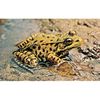
Frogs is a common name for a group of animals from the order of tailless amphibians. In a broad sense, the term "frog" refers to all representatives of the order Anurans. In a narrow sense, this name is applied to representatives of the family of true frogs. Frog larvae are called tadpoles.
Frogs are distributed throughout the globe - from the tropics to the subarctic regions; the greatest diversity is concentrated in tropical rainforests.
Sizes of adults vary from 8 mm (narrow short Paedophryne amauensis) to 320 mm (goliath frog). Representatives of the detachment have a stocky body, protruding eyes, a forked tongue, and limbs bent under the body; the tail is missing. The habitat of frogs at all stages of development includes freshwater reservoirs, and for adults - additional land, tree crowns and underground burrows. The most characteristic way of movement of frogs is jumping, but different species have mastered additional ways: walking and running, swimming, climbing, planning.
The integument of frogs is rich in glands, the skin secretions of some species are extremely poisonous. The color of frogs varies from camouflage brown, greenish and gray to the brightest red, yellow and black colors, as a rule, signaling (or mimicking) poisonousness. The skin of frogs is permeable to water, but various adaptations allow them to avoid excessive loss of moisture during a terrestrial lifestyle.
As a rule, frogs spawn in water. The eggs hatch into aquatic larvae, tadpoles with gills and tails. Tadpoles go through a stage of metamorphosis, at the end of which they turn into adults. At the same time, some species lay their eggs on land, while others do not go through the tadpole stage. The adults of most species are carnivores whose diet consists of small invertebrates, but there are also omnivorous species and even a few fruit-eating species.
Frogs are capable of producing a wide range of vocalizations, especially during the mating season. Observations of frogs have revealed complex patterns of behavior in mating rituals, when life is threatened, and in other situations.
Many species of frogs are endangered.
People eat frogs, keep them as pets, and frogs serve as convenient model organisms for biological research.


