
Person attributes


Other attributes


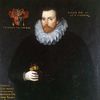
Sir Edward Coke SL ( 1 February 1552 – 3 September 1634) was an English barrister, judge, and politician who is considered the greatest jurist of the Elizabethan and Jacobean eras.
Born into an upper-class family, Coke was educated at Trinity College, Cambridge, before leaving to study at the Inner Temple, where he was called to the Bar on 20 April 1578. As a barrister he took part in several notable cases, including Slade's Case, before earning enough political favour to be elected to Parliament, where he served first as Solicitor General and then as Speaker of the House of Commons. Following a promotion to Attorney General he led the prosecution in several notable cases, including those against Robert Devereux, Sir Walter Raleigh, and the Gunpowder Plot conspirators. As a reward for his services he was first knighted and then made Chief Justice of the Common Pleas.
As Chief Justice, Coke restricted the use of the ex officio (Star Chamber) oath and, in the Case of Proclamations and Dr. Bonham's Case, declared the King to be subject to the law, and the laws of Parliament to be void if in violation of "common right and reason". These actions eventually led to his transfer to the Chief Justiceship of the King's Bench, where it was felt he could do less damage. Coke then successively restricted the definition of treason and declared a royal letter illegal, leading to his dismissal from the bench on 14 November 1616. With no chance of regaining his judicial posts, he instead returned to Parliament, where he swiftly became a leading member of the opposition. During his time as a Member of Parliament he wrote and campaigned for the Statute of Monopolies, which substantially restricted the ability of the monarch to grant patents, and authored and was instrumental in the passage of the Petition of Right, a document considered one of the three crucial constitutional documents of England, along with Magna Carta and the Bill of Rights 1689.
Coke is best known in modern times for his Institutes, described by John Rutledge as "almost the foundations of our law", and his Reports, which have been called "perhaps the single most influential series of named reports". Historically, he was a highly influential judge; within England and Wales, his statements and works were used to justify the right to silence, while the Statute of Monopolies is considered to be one of the first actions in the conflict between Parliament and monarch that led to the English Civil War. In America, Coke's decision in Dr. Bonham's Case was used to justify the voiding of both the Stamp Act 1765 and writs of assistance, which led to the American War of Independence; after the establishment of the United States his decisions and writings profoundly influenced the Third and Fourth amendments to the United States Constitution while necessitating the Sixteenth.


