Log in
Enquire now
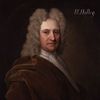
Edmond Halley

Edmond Halley

English astronomer, geophysicist, mathematician, meteorologist, and physicist

OverviewStructured DataIssuesContributors

Contents

Is a
Person
Person

Person attributes

Birthdate
October 29, 1656
Birthplace
Haggerston
Haggerston
Date of Death
January 14, 1742
Place of Death
Greenwich
Greenwich
Author of
‌
Degrees of mortality of mankind
0
‌
Edmundi Halleii astronomi dum viveret regii Tabulae astronomicae
0
‌
The description and uses of a new and correct sea-chart of the Whole world, shewing the variations of the compass
0
‌
Astronomical tables with precepts
0
‌
The Three Voyages of Edmond Halley in the "Paramore" 1698-1701
0
‌
Degrees of mortality of mankind as presented in his papers, entitled 1- An estimate of the degrees of the mortality of mankind, drawn from curious tables of the births and funerals at the city of Breslaw
0
‌
Tables astronomiques de M. Halley, pour les planètes et les comètes, réduites au nouveau stile & méridien de Paris, augmentées de plusieurs tables nouvelles de différens auteurs, pour les sattellites de Jupiter & les étoiles fixes, avec des explications détailées
0
‌
Edmundi Halleii astronomi dum viveret regii tabulæ astronomicæ. Accedunt de usu tabularum præcepta
0
Educated at
University of Oxford
The Queen's College, Oxford
‌
St Paul's School, London
Occupation
Scientist
Scientist
Mathematician
Mathematician
Astronomer
Astronomer
Philosopher
Philosopher
Physicist
Physicist
Author
Author
0
Writer
Writer
0
ISNI
00000000807772820
Open Library ID
OL1323542A0
VIAF
714006650

Other attributes

Citizenship
Kingdom of England
Kingdom of England
Wikidata ID
Q47434

Edmond (or Edmund) Halley ( 8 November 1656 – 25 January 1742 ) was an English astronomer, geophysicist, mathematician, meteorologist, and physicist. He was the second Astronomer Royal in Britain, succeeding John Flamsteed in 1720.

From an observatory he constructed on Saint Helena in 1676–77, Halley catalogued the southern celestial hemisphere and recorded a transit of Mercury across the Sun. He realised that a similar transit of Venus could be used to determine the distances between Earth, Venus, and the Sun. Upon his return to England, he was made a fellow of the Royal Society, and with the help of King Charles II, was granted a master's degree from Oxford.

Halley encouraged and helped fund the publication of Isaac Newton's influential Philosophiæ Naturalis Principia Mathematica (1687). From observations Halley made in September 1682, he used Newton's laws of motion to compute the periodicity of Halley's Comet in his 1705 Synopsis of the Astronomy of Comets. It was named after him upon its predicted return in 1758, which he did not live to see.

Beginning in 1698, Halley made sailing expeditions and made observations on the conditions of terrestrial magnetism. In 1718, he discovered the proper motion of the "fixed" stars.

Timeline

No Timeline data yet.

Current Employer

Patents

Further Resources

Title
Author
Link
Type
Date
No Further Resources data yet.

References

Find more people like Edmond Halley

Use the Golden Query Tool to discover related individuals, professionals, or experts with similar interests, expertise, or connections in the Knowledge Graph.
Open Query Tool
Access by API
Golden Query Tool
Golden logo

Company

  • Home
  • Pricing
  • Enterprise

Legal

  • Terms of Service
  • Enterprise Terms of Service
  • Privacy Policy

Help

  • Help center
  • API Documentation
  • Contact Us
By using this site, you agree to our Terms of Service.
