Log in
Enquire now
Channelrhodopsin

Channelrhodopsin

Channelrhodopsins are light-sensitive receptors naturally found in certain algae. They are notable in the field of optogenetics because the transfection of channelrhodopsins into neurons allows the neurons to be depolarized using blue light.

OverviewStructured DataIssuesContributors

Contents

Other attributes

Wikidata ID
Q905325

The video below demonstrates the use of blue light to stimulate channelrhodopsin-2 (ChR-2), a protein from the algae Chlamydomonas reinhardtii, artificially expressed in the membranes of neurons in the motor cortex of a live mouse. The experimenter is able to control the mouse's movement optically by using ChR-2 as a light-gated ion channel. Since motor control is lateralized and only one side of the motor cortex has been transfected with ChR-2, the mouse involuntarily walks in a circle when the light is on, and can walk normally when the light is off.
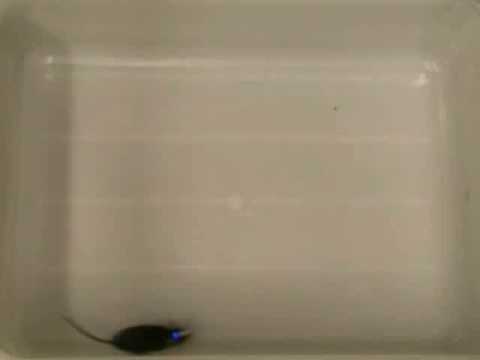
Demonstration of using ChR-2 to optically control neuronal activity in a mouse.

Timeline

No Timeline data yet.

Further Resources

Title
Author
Link
Type
Date
No Further Resources data yet.

References

Find more entities like Channelrhodopsin

Use the Golden Query Tool to find similar entities by any field in the Knowledge Graph, including industry, location, and more.
Open Query Tool
Access by API
Golden Query Tool
Golden logo

Company

  • Home
  • Pricing
  • Become an Editor
  • Enterprise

Legal

  • Terms of Service
  • Enterprise Terms of Service
  • Privacy Policy

Help

  • Help center
  • API Documentation
  • Contact Us

Explore companies

  • Artificial Intelligence
  • Fintech
  • Biotechnology
  • Cybersecurity
  • Semiconductors
  • Electric Vehicles
  • Cloud Computing
  • Robotics
  • SaaS
  • Renewable Energy
  • Venture Capital
  • Blockchain
  • Browse all →
By using this site, you agree to our Terms of Service.
