

Caronno Pertusella is an Italian town of 17 940 inhabitants in the province of Varese in Lombardy. It is part of the Milanese metropolitan area, once called Caronno (until 1863) and then Caronno Milanese (until 1940). Until 1869 the village of Cassina Pertusella was a separate municipality. With the establishment of the province of Varese it was annexed to this by that of Milan, while maintaining the original name for a few more years. In addition to the two centers, Caronno and Pertusella, no longer physically separated due to the uniformity reached by the agglomeration, there is also the locality of Bariola.
In the first twenty years of the third millennium, the municipality recorded an increase in the resident population of 15%, thanks to the progressive removal from the center of Milan and the neighboring municipalities of many inhabitants, in search of areas that are relatively less overbuilding and with a lower cost of housing. without moving too far from the metropolitan area.
History:
From Caronum, the Roman name of Caronno Pertusella, passed the via Mediolanum-Bilitio, which connected Mediolanum (Milan) with Luganum (Lugano) passing through Varisium (Varese).
Symbols:
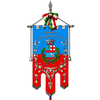
The coat of arms of the Municipality of Caronno Pertusella was recognized with a royal decree of 25 February 1934.

«Truncated semipartite: in the first part of blue, to the Visconti snake; in the second silver, to the red cross; in the third of blue, to the silver Roman chariot; to the band of red, crossing the partition. "
Ethnicities and foreign minorities:
According to ISTAT statistics as of 1 January 2016 the foreign population residing in the municipality was 1,224 people, equal to 7% of the population. The nationalities most represented on the basis of their percentage of the total resident population were:
Romania 314
Albania 132
Morocco 122
Ukraine 85
Ecuador 75
Peru 60
Pakistan 39
China 37
Moldova 34
Senegal 30
Culture:
Caronno Pertusella has distinguished itself for a series of initiatives that have given it a certain visibility of a national nature, including the overcoming of the Guinness Book of Records for the largest tiramisu in the world (22 April 2007), the largest mille-feuille cake in the world. world (May 16-17, 2009) and the longest softball game in the world (120 consecutive hours) played between June 1 and 6, 2010. Along with these events more or less covered by local media, the perhaps the most well-known initiative at national level, the start-up in 2009 of the first Italian area dedicated to neighborhood control, a phenomenon that spread throughout the country in over 400 municipalities (February 2018). This is a participatory security initiative based on the Anglo-Saxon neighborhood watch.