
Other attributes
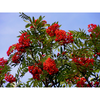
Rowan is a beautiful curly tree that stands out vividly in winter among the snows with its scarlet berries. Rowan is often called the tree of health. Rowan berries in fresh form are tasteless: they are bitter. After the first frosts, the bitterness of the fruits decreases significantly, and they become a favorite treat for birds. That is why this tree is also popularly called "birdman". But rowan is useful not only for animals and birds. Its fruits have been used for centuries in cooking, cosmetology. Folk medicine uses bark, leaves, flowers and berries of mountain ash in the manufacture of various products for oral or external use in various diseases. HOW AND WHERE Rowan trees GROW are very common in the northern temperate climate zone (in Europe, Asia, North America). Botanists count more than a hundred species of mountain ash, of which the most common is the common mountain ash. This tree tolerates frost well.
Mountain ash has a round crown. The bark of young trees has a dark gray color, smooth to the touch. Cracks appear on the bark of old plants. Rowan shoots are covered with down. After the buds open, large unpaired leaves with 11-23 serrated leaflets appear, which have a rich green color on top, and a bluish shade on the bottom. In May-June, mountain ash blooms. Her flowers are gathered in white tassels. During the flowering period, mountain ash exudes a specific, strong-smelling aroma that attracts bees. Therefore, mountain ash is a good honey plant. The berries that appear on the trees after flowering look like small apples. The fruits ripen in September-October. Only ripe berries are edible. Mountain ash lives up to two hundred years. The height of the trees can reach 15 meters. It begins to bear fruit from 5-6 years. Plants older than 30-35 years bear maximum fruit. The tree yields a good harvest once every 2-3 years. At the same time, one large rowan can harvest berries up to 100 kg. The chemical composition of Ripe
The caloric content of berries is low and amounts to 50 kcal per 100 g. Carbohydrates of rowan berries are 55% represented by dietary fibers - water-insoluble fiber and water-soluble pectin, 35% - starch and 10% - mono- and disaccharides (glucose, sucrose, fructose). The high content of vitamins, macro- and microelements make rowan fruits a real storehouse of valuable substances.