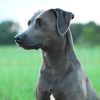
Blue Lacy is a breed of shepherd dogs bred in the 1800s in Texas (USA). It is the only breed of dog bred in this state. In 2005, the governor of Texas signed a law in which the Blue Lacey breed was recognized as the official symbol of the state of Texas.
The breed received its first official recognition in the second half of the twentieth century.
The breed is recognized by the following cynological organizations: ARF (Animal Research Foundation), American Rare Breed Association, National Kennel Club (NKC)
Another name of the breed is Texas Blue Lacy (Texas Blue Lacy).

History of the breed
The formation of the Blue Lacey breed was started in the middle of the XIX century by an American farming family named Lacey, who lived near the town of Burnett in Texas. The surname of the family of farmers who created the breed was later included in the name, and the prefix "blue" means the color that is predominant in dogs of this breed.
The first mention of this breed is found in the documents of the Lacy Brothers ranch in 1858. Brothers Frank, George, Edwin and Harry Lacey started creating the breed. Subsequently, the creation of this breed brought Lacy farmers greater fame than the actual farm work on the maintenance of large herds of cattle.
The task that the Lacey brothers set themselves when forming a new breed was to create a dog that could successfully protect herds from coyote attacks. To do this, such dogs had to have a good sense and high protective qualities, endurance and quick reaction. In addition, it was important to form a dog phenotype that would make it easy to distinguish it by silhouette from a coyote, including at dusk and at night.
The breed was based on English shepherds, greyhounds and shepherd dogs that lived in the region at that time and did not have a single formed phenotype. Later, to improve their flair, the blood of several hounds of breeds was poured into them. Presumably, American raccoon hounds (American coonhounds) were used for such an infusion, but no exact confirmation of this has been preserved.

For a long time, dogs of this breed were used exclusively as workers, and in addition to their initial use as a shepherd and guard dog, the Blue Lacy gradually began to be used as universal hunting dogs, used both for corral hunting of large game and for tracking the beast on the trail. Thanks to these abilities, blue Laceys have gained popularity among American trappers (seasonal hunters of fur-bearing animals).
Work on the official recognition of the Blue-Lacey breed was started only in 1970, when the first breed club was created, called the Preston's Big Blue Club. By 1976, a single standard of this breed was formed in the club, which remains relevant even now. Despite the efforts of fans of the breed, it has not yet been possible to obtain official recognition of the International Cynological Federation (FCI) Blue Lacey.
Appearance
Blue Laceys are medium-sized dogs with a dry, athletic build and light sweeping movements.
When evaluating a dog, great importance is attached to the harmony and efficiency of the animal. Scars and traces of injuries are not considered as disadvantages or disqualifying signs, as they are considered to confirm the working qualities of the dog.
Preference is given to dogs that successfully pass work tests or are used on a permanent basis in targeted work.
Dogs of this breed have a strong sexual dimorphism. Males have a looser and more muscular build, as well as a shortened body. Bitches have a lighter backbone and a drier type of addition, and the body format of bitches is more stretched.
The head is medium-sized, set high, with a pronounced relief of the muzzle. The transition from forehead to muzzle is pronounced, but smooth. The frontal part and the muzzle have approximately the same length. The relief of the cheekbones is well pronounced, the lips are tight. In males, the presence of small wings is acceptable.
Ears are semi-erect or hanging, small in size, triangular in shape, set low. Too long ears or standing ears are a disqualifying sign.

The eyes are round, widely spaced, and have a color from bright yellow to dark brown. The nose lobe is well pronounced, the color of the nose lobe, lips and eyelids should coincide and harmonize with the color of the dog. Acceptable colors of the nose, eyelids and lips are black, brown, liver colors of different intensity.
The neck is muscular, of medium length, with a slight bend. The withers are well developed. The case is strong, balanced, square or slightly stretched format. The back is smooth, without sagging, with pronounced musculature. The chest is deep, moderately wide, with a pronounced curve of the ribs. The transition from the chest to the abdomen is well expressed, the abdomen is tightened.
The croup is well defined, muscular, rounded.
The limbs are muscular, set straight, there is no pronounced removal of the limbs from under the body. The relief of the joints is not pronounced. The paws are dense, with well-developed arched fingers, there are pronounced skin membranes between the fingers. The pads of the paws are dense.
The tail is thin, of moderate length, set high, while moving, as a rule, the dog keeps it raised.
The coat is short, smooth, very tight to the body. The undercoat is poorly developed. Visually, the wool has a characteristic glossy sheen, its absence is considered a disadvantage.
The color of blue lacey, despite the name, can be not only blue, but also cream, fawn red ("rusty", English rusty) and tricolor. It is important to note that the blue color in the breed is not associated with the presence of the blue color gene, which is absent in blue Lacey. Their color is actually a lightened or smoky version of black (in the case of blue color) or red (in the case of red and cream colors). It is also acceptable to have tiger, black and piebald colors in fawn variations. Large white markings exceeding 1/4 of the dog's color in area are not allowed.
Personality
Blue Laceys have an energetic and active temperament, are highly interested in work and curious. At the same time, dogs of this breed are not inclined to show hyperactivity and persistence in the desire to play.

Frequent contact with the owner and family members is important for these dogs, as they are very sociable and human-oriented. Blue Lacey cannot be called a "dog of one owner", these dogs actively and with interest communicate with all family members and people who regularly visit the house.
The Blue Laceys do not show aggression towards their fellow tribesmen and other pets and tend to communicate with them. At the same time, they are successfully used in hunting, where they are used exclusively for tracking the beast, but not for baiting, so they lack aggression and a tendency to spontaneous bites, unlike many hunting breeds.
In general, when at home, blue Laceys are quiet and calm, not inclined to bark and arrange noisy games. But during work, dogs of this breed often accompany their movements by barking, thus indicating their own location or driving out the beast by barking.
Maintenance and care
Blue Laceys are not demanding in maintenance and do not need complex specialized care. These dogs can be recommended as the first dog for novice dog breeders due to their gentle nature and lack of specific care requirements.
Blue Lacey molting is strictly seasonal, takes place in spring and autumn. Wool can fall out on its own without the risk of tangles, without requiring constant combing even at this moment.
Due to the active temperament, blue Laceys need high loads, while the emphasis on walking should be placed not so much directly on its duration as on a variety of mental and physical activities.

In general, dogs of this breed have fairly good health and good immunity, but in the genetics of the breed there is a gene for follicular insufficiency (follicular dysplasia), which leads to the formation of bald patches and the fact that the coat becomes rare. This genetic feature is close to the gene of Chinese and Mexican naked dogs, and is an external feature, not a disease.


