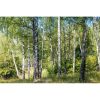


The common birch is a genus of deciduous trees and shrubs belonging to the Birch family. Habitat in nature throughout Russia and the Northern Hemisphere. The name of the tree comes from the root bhereg, which means to glow, to whiten.
Birch - description and characteristics
Birch is a white-stemmed tree reaching a height of up to 30 m. She lives about 100-150 years. It has a smooth long trunk, smooth, with characteristic black lines or spots on the surface of the bark. The tree has branched roots that go deep into the ground. The leaves are triangular oblong in shape of different sizes, very fragrant, painted in different shades of green, jagged at the edges. Young leaves can be sticky.
It is widely used in folk medicine. For example, from the branches you can assemble a broom for a bath, soaring with which will ease muscle tension and soothe the skin. Birch sap has a beneficial effect on blood circulation, and tar will help with skin diseases.
The beauty and significance of this tree is praised in literature, and the advantages of birch as a plant cannot be overestimated. It is hardy and tolerant of any weather and soil, which is why its natural habitat in nature is so wide.
Wood
Birch wood is very durable, the surface of the bark has a light shine. Due to its strength properties, special elasticity, it is widely used in construction and finishing works and in carpentry and furniture production. Without proper treatment, it tends to rot.
Blossom
It starts already in April. Birch has staminate and pistillate catkins. Pistillate - female, 2-3.5 cm in length, one on a branch. They live mainly on the side of the branch. They appear with the opening of the first leaves. Staminate - male, long scaly, 6-7 cm long, 3-4 units on branches, liberally secrete pollen. One earring includes about 600 seeds. The fruit is an oval nut with two wings that are several times larger than it. Maturation begins in August. Seeds are spread on the ground thanks to the wind and take root in any soil.