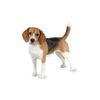
The beagle is one of the most recognizable medium-sized dog breeds, known for its large, expressive eyes; long, floppy ears; and an upright, white-tipped tail. It has a short tricolored coat typically dominated by white and varied shades of brown. Beagles are scent hounds, hunting and tracking their prey by ground-scenting, and their keen sense of smell ranks with bloodhounds and basset hounds.
Breed Overview
GROUP: Hound
HEIGHT: 15 inches or less in height at the shoulder, with two varieties: those under 13 inches and those from 13 to 15 inches
WEIGHT: 20 to 25 pounds
COAT: Short
COAT COLOR: Tricolor combinations can include tan, black, white, reddish brown, and pale lemon
LIFE SPAN: 10 to 15 years
TEMPERAMENT: Active, companionable, keen, attentive, fearless
HYPOALLERGENIC: No
ORIGIN: England

Characteristics of the Beagle
Beagles are energetic, carefree, and optimistic dogs, and they are considered one of the most popular breeds for active households. They can be wonderful companions and great family dogs when properly trained and socialized. Having been bred to be in packs, they also get along well with other dogs, and most do well with cats, especially if raised together.
History of the Beagle
The origin of the word "beagle" is uncertain. It's thought that it may have been derived from the French word begueule, meaning open throat, or from the Old English word beag, meaning small. Others think it may have come from the French word beugler, meaning to bellow, or the German word begele, meaning to scold.
The breed's history is cloudy as well because breeds as we know them today didn't really develop until the 19th century. Greek documents from 400 B.C. describe Beagle-like dogs, and the Romans may have brought small rabbit-hunting hounds with them to England and bred them with the local hounds.
William the Conqueror reportedly brought Talbot hounds (now extinct) to England during the Norman Conquest in 1066. These dogs are thought to be the ancestors of the Beagle and the Foxhound.
Beagles became popular in England very early in its history. During the reigns of Edward II (1307 - 1327) and Henry VII (1485 - 1509), extremely small beagles, called Glove Beagles, were popular. They reportedly were small enough to be held in a gloved hand. There's also mention of Singing Beagles, named for their bugling voices.
Elizabeth I (1533 - 1603) kept packs of Pocket Beagles that stood only 9 inches tall. These small dogs were depicted in paintings as short-legged and pointy nosed. They were used for hunting, but quickly fell out of favor because they weren't very fast.
In the 1700s, fox hunting became popular in England, and the Beagle fell out of favor as the larger Foxhound became the dog of choice. If it hadn't been for the farmers in England, Ireland, and Wales who continued to keep packs to hunt rabbit and hare, the breed might have become extinct at that time.
In the mid-1800s Reverend Phillip Honeywood established a pack of Beagles in Essex, England. These dogs are thought to be the ancestors of the modern Beagle. Rev. Honeywood bred for hunting skills, not looks. Thomas Johnson, a fellow Englishman, was responsible for breeding Beagles who were both attractive and good hunters.
At about the same time, American breeders started importing Beagles from England to improve the looks of their own dogs. Many of the English imports were bred to an average height of 15 to 17 inches at the shoulder so they could hunt fox. American breeders started breeding them to be smaller for rabbit hunting.
Of interest is the "Patch" Beagle strain developed by Willet Randall in New York around 1880. The line is primarily white with a very large tri-colored spot. They were very popular in the 1940s and 1950s because they were able to run so fast. Today, many people call lemon and white or red and white beagles "Patch" beagles.
The American Kennel Club and the first Beagle specialty club both were founded in 1884. In that same year, the AKC began registering Beagles.
In 1916, five members of the National Beagle Club purchased 508 acres in Western Loudoun County, Virginia for the purpose of holding field trials. The men who purchased it formed a corporation called Institute Corporate to purchase and own the land, then leasing it to the Institute Foundation that maintains the property for the National Beagle Club, which today is the site of many activities of the National Beagle Club.

Hunting Beagles
Beagle Care
These fearless hounds are well-suited to both hunting and companionship, but they need adequate daily exercise, regular grooming, and proper training. They require human companionship or the companionship of other pets throughout the day. Because beagles get along with other dogs, freestyle running in a properly enclosed dog park can be fun exercise for both of you. Beagles instinctively will bay and bark when they detect an interesting scent, but they may also become problem barkers due to boredom or separation anxiety, and training may help.
Exercise
Though they may sometimes act lazy on the surface, beagles have loads of energy and need regular exercise to use it up, even more so than other dogs. Otherwise, the dog may release that mischievous nature inside. Walk your dog once or twice daily and give it plenty of chances to run and play to result in at least a full hour of exercise a day.
Grooming
Beagles have short, water-resistant coats with a moderate to high rate of shedding. Routine basic grooming is all that is typically necessary to keep beagles looking their best. Luckily, their coat doesn't pick up much debris, so you won't need frequent baths or cleaning up what your dog tracks into the house.
Be sure to keep their floppy ears clean to prevent ear infections. Also, remember to trim the dog's nails regularly to prevent overgrowth, which can affect the gait. It is also good to brush your dog's teeth at least a couple of times per week to maintain good oral health.
Training
As scent hounds, they enjoy sniffing everything along your walks, which will exercise your dog's mind as well as his body. However, you will need good leash control and training, so you can control your dog if he gets a scent that he wants to track.
Without proper obedience training, beagles can be become unruly and defiant due to their strong-willed nature. They are notoriously difficult to train and command, and you have to make it fun and interesting for your dog to pay attention to your wishes.

Common Health Problems
Responsible breeders strive to maintain the highest breed standards as established by kennel clubs like the AKC. Dogs bred by these standards are less likely to inherit health conditions. However, some hereditary health problems can occur within any breed. In general, beagles are usually healthy dogs. However, they can still develop health conditions. The following are some conditions to watch for:
- Epilepsy: A neurological disease that causes seizures
- Hypothyroidism: A condition caused by insufficient thyroid hormones
- Intervertebral Disc Disease: A condition that occurs when the discs between vertebrae bulge and press on nerves
- Progressive Retinal Atrophy (PRA): A genetic disease characterized by the bilateral degeneration of the retina

Ilustration: The Spunce
Diet and Nutrition
Beagles love to eat and are notorious for detecting, raiding, and eating anything they can find. You should provide two meals a day of up to 3/4 cup of dry dog food per meal. The amount will vary by the dog's size, age, activity level, and other factors. Keep the dog food and your human food well-secured against this hungry canine. Because of their omnivorous appetites, you will have to monitor your dog's weight and take action if you see it is becoming overweight. Discuss your dog's needs with your veterinarian to get recommendations for the right food, feeding schedule, and amount.
Where to Adopt or Buy a Beagle
Before adopting or buying a beagle, remember this dog needs a family that can genuinely and consistently offer it a lot of time and attention. Check your local animal shelter to see if there's a beagle in need of a home. Additionally, check state and regional rescue groups, which include but are not limited to:
- New Jersey: SOS Beagle Rescue
- Midwest: Midwest Beagle Rescue, Education & Welfare
- North Carolina: Triangle Beagle
- New England: Beagles of New England
- Southern California: Beans Beagle Rescue
- Pacific Northwest: Cascade Beagle Rescue
The National Beagle Club of America also lists breeders on its website, though the group does not endorse or guarantee any organization or person.


