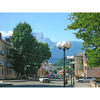

Alagir is an interesting small town, rich in inexhaustible natural resources and unique landscapes.
The city of Alagir is the administrative center of North Ossetia, as well as a developed transport and economic hub. The name means "upper" in the Ossetian language. Alagir is located near the Caucasus Mountains and the Ardon River in the center of the republic on the Ossetian Plain.
Among the small towns of Alanya, it is in third place in terms of the number of inhabitants and the development of the economy after Beslan and Mozdok. Alagir is located in such an advantageous place from which it is convenient to go on excursions in the North Caucasus, while living in a quiet, calm town. This is a great solution for families who love peace and quiet.

In 1824, the Salugardan settlement was founded on the site of the modern city.
In 1850, a silver-lead factory and a settlement for workers with the name Gornaya Stanitsa were built.
At the end of the 19th century, two churches, two schools, a post office, a pharmacy, a market, and a veterinarian functioned in the Alagir settlement.
In 1905, a large armed uprising of peasants took place in the village.
In the first half of the 20th century, the Tamisk balneological resort was opened in Alagir with sources of useful mineral waters.
In 1938, Alagir received the status of a city.
From November 1941 to December 1942 the city was under Nazi occupation.
The relief on which the city is located is predominantly hilly with a slight slope towards the northeast.
The territory of the city is bordered from the east by the river Ardon, from the south by the foothills of the Caucasus, from the north by the sloping Ossetian plain, from the southwest by the river Krupsdon.
Climate and weather
Alagir has a temperate continental climate. Winters are mild and short. The average temperature in January is -2.2 degrees.
Summer is very warm and long. The average temperature in July is +21.2 degrees.
Population
The total number of inhabitants for 2021 was 19.7 thousand people.