Log in
Enquire now
World-System theory

World-System theory

World-systems theory (also known as world-systems analysis or the world-systems perspective)[1] is a multidisciplinary approach to world history and social change which emphasizes the world-system (and not nation states) as the primary (but not exclusive) unit of social analysis.

OverviewStructured DataIssuesContributors

Contents

en.wikipedia.org/wiki/World-systems_theory

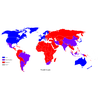
"World-system" refers to the inter-regional and transnational division of labor, which divides the world into core countries, semi-periphery countries, and the periphery countries. Core countries focus on higher skill, capital-intensive production, and the rest of the world focuses on low-skill, labor-intensive production and extraction of raw materials. This constantly reinforces the dominance of the core countries. Nonetheless, the system has dynamic characteristics, in part as a result of revolutions in transport technology, and individual states can gain or lose their core (semi-periphery, periphery) status over time. This structure is unified by the division of labour. It is a world-economy rooted in a capitalist economy.

Timeline

No Timeline data yet.

Further Resources

Title
Author
Link
Type
Date

Chase-Dunn, Christopher K. [WorldCat Identities]

https://worldcat.org/identities/lccn-n82100177/

Web

Christopher Chase-Dunn

https://en.wikipedia.org/wiki/Christopher_Chase-Dunn

Web

Frank, Andre Gunder 1929-2005 [WorldCat Identities]

https://worldcat.org/identities/lccn-n79084886/

Web

References

Find more entities like World-System theory

Use the Golden Query Tool to find similar entities by any field in the Knowledge Graph, including industry, location, and more.
Open Query Tool
Access by API
Golden Query Tool
Golden logo

Company

  • Home
  • Pricing
  • Enterprise

Legal

  • Terms of Service
  • Enterprise Terms of Service
  • Privacy Policy

Help

  • Help center
  • API Documentation
  • Contact Us
By using this site, you agree to our Terms of Service.