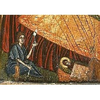

Rozhanitsy (, orisnitsy) - in Slavic mythology, female beings who determine the fate of the child at birth. Usually there are three rozhanitsy. Known mainly among the southern Slavs. Separate mentions of them are found in Czechs, Slovaks and Western Ukraine. In the Eastern Slavs were mentioned in church denunciatory literature directed against pagans.
In the Bulgarian tradition was correlated with the Virgin Mary and two "sisters" - St. Petka (Pyatnitsa) and St. Week (Resurrection).
In medieval Russian teachings against paganism, together with the Rozhanitsy also mention Rod, with whom they acted as patrons of the family and the giver of fortune to descendants.
Slavists of the late nineteenth and early twentieth centuries were of the opinion that Rod was the proper name of a forgotten Slavic god. In the 1970s-1990s the reconstruction of the pantheon proposed by B. A. Rybakov, Rod becomes the main Slavic deity. However, according to the majority of scientific studies, Rod (as well as Rozhanitsy) was an East Slavic deity or spirit-guardian of family and destiny.
Description
South Slavic "sudzhenitsa" are associated with women in childbirth, who told fate to a newborn or gave a gift that determined his future life.
Sometimes it is believed that if they do not come, the child will be taken away by evil spirits. It was often believed that they gave the child a gift (toy) that determined his future fate. They were perceived as God's messengers, even more often they were considered neutral, so as not to wish a bad child - they tried to appease them. For example, they laid a clean tablecloth on the table with various treats to these spirits, so as not to wish the child a hungry life, they could specially bake bread, treating them to all the household and midwives, often the meal was prepared three evenings in a row waiting for three judges, cleaning was mandatory in the house, candles and flowers could be left on the table, everyone dressed in elegant clothes. Various symbols of a prosperous life were placed in the cradle: money, wine and bread to be full, basil to be healthy, etc.
Often, on the third day, all close relatives were gathered for dinner, the grandmother or the eldest woman in the house would hang the child, tie the ring to diapers, swing the cradle and express good wishes, which was perceived by others as a prediction of the judges. Or next to the woman in labor and the child all night was to sit an elderly woman who protected them from the judges. They tried to deceive the sorcerers by taking the child to another house, and in his place putting a doll. They could lock windows and doors and not come out after sunset. Amulets were placed in the cradle.
There were superstitions, according to which, in order not to appear and not to spoil the fate of the child, women in labor were not allowed to sleep for three days, or vice versa, they tried to put them to sleep. The probable basis of such a mythical character was the custom when women in labor and midwives gathered at the cradle of a newborn to determine his fate. An echo of beliefs has been preserved in European fairy tale stories about fairy godparents, for example, in the fairy tale "Sleeping Beauty".
In appearance and functions, sudzhenitsa are similar and sometimes mixed with South Slavic pitchforks, samodivs (orisnitsa), yuds; West Slavic goddesses, veshtitsa; as well as demons that harm the woman in labor and newborns, and demons of disease. They often appear together with other demons.


