
Technology attributes


Other attributes
StarTram is a proposed space launch system. The system was developed by physicist James R. Powell and is based on the superconducting magnetic levitation (maglev) concept Powell developed with Geroge Danby in 1966. The maglev technology has since been used in high-speed trains. The concept would launch cargo from a mountain peak at an altitude of 3 to 7 kilometers (9,800 to 23,000 ft) with an evacuated tube, similar to a train to space. The first generation of the concept, which would only be able to launch cargo, could launch, according to estimates by Powell, around 150,000 tons into orbit annually. A second-generation version of the StarTram concept was also conceived, which could bring passengers, which would require a longer track with a more gradual curve to reduce the gravitational forces (g-forces) on the travel to a level humans can tolerate.

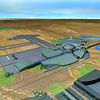
Concept image of the StarTram orbital launch system.
The generation 1 StarTram system developed by Powell is a concept for low-cost, high-volume Earth-to-orbit transport of cargo. The system would use an evacuated launch tube magnetically levitated above the Earth's surface. While advanced as a concept, as Powell proposed, it is within the limits of existing technology when the concept was initially developed. The tunnel would use superconducting magnetic levitation technology to accelerate and launch a vehicle to near orbital velocity from ground level to orbit at a lower cost to deliver payloads than traditional launch systems.
The traditional launch cost of one kilogram (2.2 pounds) of cargo by rocket into low Earth orbit is about USD $10,000, and this is subject to change depending on the year and inflation. Meanwhile, when developing the concept, the estimate is that, including costs for the development of the StarTram system, the launch vehicle and the energy costs would cost around USD$30 to $60 per kilogram. This cost ranges in estimates but remains miniscule compared with the traditional cost.

How the vacuum-sealed launch tube would look from the ground in concept images.
Depending on who conducts the estimate, estimated costs of developing a StarTram system range from USD $20 billion to $60 billion for a generation 1 system. A generation 1 system would take up to ten years to develop, while a generation 2 system would take an additional ten years. However, the development of even the generation 1 would reduce costs for transport, making orbital travel far less expensive, because rocket propulsion could be reserved for human-to-orbit travel (until a generation 2 system is developed) while using far fewer resources than a traditional launch vehicle. As well, the lack of use of rocket fuel makes the StarTram system more environmentally friendly and could make space travel and transport into orbit more sustainable.
The vacuum tube the maglev system would use would require the tube to maintain a vacuum equivalent to atmospheric conditions to reduce the amount of atmospheric gases in the tube, which would create drag, friction, and extreme heat and stress that would increase the cost of the development of the launch vehicle and put the system at greater risk. However, the StarTram system would use a magneto hydrodynamic (HMD) pump, which would create an "MHD window," allowing one end of the launch tube to be open to the atmosphere and permit the launch of the vehicle. The MHD window allows ionized gases to be continually expelled from the tube to maintain the near-vacuum at all times.

A cross-section image of the StarTram launch tube.
The generation 1 StarTram system and its tunnel tube would have no superconductors, no cryogenic cooling requirements, and none of that at a higher elevation than the local ground surface. Further, the superconducting magnets would be on the moving spacecraft, inducing current into relatively inexpensive aluminum loops on the acceleration tunnel walls, which would levitate the craft with 10 centimeters of clearance while a second set of aluminum loops on the walls could carry an AC current to accelerate the craft in a linear synchronous motor. The design of the system is capable of being highly redundant to make a failure of the levitation system unlikely.
The tube of the system would have to be firmly anchored, with concepts using high-strength kevlar tethers to anchor the launch tube against crosswinds and prevent lateral or vertical movement, which could cause complications for the launch system. The maglev tube would be around 2 meters in diameter and approximately 130 kilometers long. To help the system and to simplify the launch of the space shuttle vehicles from the maglev tubes, the tube would be built up the side of a mountain to reach a launch altitude of 12,000 to 20,000 feet. This could be at the Andes Mountains of Chile or the White Sands Missile Range of southern New Mexico.
The generation 1.5 of the StarTram system has been proposed as an effective hybrid between the generation 1 and generation 2 systems. The generation 1.5 system would use rockets after entering the atmosphere to overcome atmospheric drag forces, but with a longer tunnel and an optimized hybrid rocket, it could bring around one hundred passengers to orbit on launch and could be used for tourism, while being easier to implement than the generation 2 system.
The generation 2 StarTram has been proposed for reusable crewed capsules that are, in contrast to the generation 1 system, to be a low g-force system, limited to around 2 to 3 g-forces in acceleration in the launch tube and an elevated exit at such a high altitude that peak aerodynamic deceleration becomes around 1 g-force. NASA test pilots and astronauts handle multiple times greater these g-forces, and the relatively low g-force of the generation 2 system allows eligibility of travel to the broadest spectrum of the general public, therefore making space travel and flight more available to anyone.

Example of a StarTram system exiting the tube and entering the low Earth orbit with a propulsion system capable of orbital navigation.
Due to the low g-forces and need for relatively slow acceleration, while reaching necessary altitudes, the generation 2 system would require around 1000 to 1500 kilometers of tunnel. The cost of the non-elevated majority of the tube's length would be estimated to cost several tens of millions of dollars (USD) per kilometer, although developments in technology and materials science could be proposed to reduce this cost. The necessary area for the system has led to suggestions that areas of Antarctica or northern Canada, remote and otherwise uninhabited spaces, could be used for the tunnels.
This system would allow the StarTram system to be used for the commercial exploration of space, such as making orbital hotels a potential travel goal of the middle-class tourists. Meanwhile, any StarTram system could be used to deploy communication and imaging satellites, drastically reduce the costs of LEO insertion, and reduce the cost of entering space enough that commercial exploration of the resources of space is fiscally viable.
The prices and challenges, as detailed below, of developing the StarTram system have been suggested as capable of leading to the utilization of near-earth asteroids for habitats that would be immune to ionizing radiation and with protection from the Earth from impacts, safe space tourism, and the development of colonies and commercial utilization of the moon, Mars, and the outer solar system. Further, the maglev tunnels used to launch StarTram vehicles into space can be utilized for terrestrial transportation, leading to a reduction in energy consumption in transportation.
There are generally considered to be four main challenges to the development of the StarTram system. The first is the massive amount of power necessary to propel the spacecraft to high speeds, which would require between 50 and 100 gigawatts of power to be discharged over roughly 30 seconds. There would be greater costs associated with energizing the cables for levitating the maglev tunnel, which would require a significant amount of current.
Second, levitating the generation 2 StarTram launch tube to the required height has been called a technical feat unlike any other. There have been two proposed ways to accomplish this, with Powell suggesting the first to construct the launch tube on the surface, together with superconducting cables and restraining tethers, and then to slowly energize the cable and levitate the tunnel over a period of days. The second option would be to erect the cable and tether system and lift the launch tube using additional lifting tethers.
The third hurdle would be maintaining the vacuum inside the open tube. As explored above, the offered solution includes a plasma pump device at the exit point to keep the air out, and while some such devices exist, they have not yet been built for an application such as the StarTram system.
The final challenge of the system is one that has been explored above, and is perhaps the first challenge that would have to be tackled, which is the cost of developing the project. Estimates have the generation 1 StarTram costing around USD $20 billion or more. Where the generation 2 could cost upwards of USD $60 billion. These tend to be optimistic estimates, with others adding from USD $10 to $30 billion to each estimate. However, there are reasons to spend the money, as the technology exists and could provide huge benefits, and the cost would remain not near the USD $196 billion spent on NASA's Space Shuttle program.


