
Person attributes


Other attributes


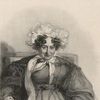
Sabrina Bicknell (1757 – 8 September 1843), better known as Sabrina Sidney, was a British woman abandoned at the Foundling Hospital in London as a baby, and taken in at the age of 12 by author Thomas Day, who tried to mould her into his perfect wife. She grew up to marry one of Day's friends, instead, and eventually became a school manager.
Inspired by Jean-Jacques Rousseau's book Emile, or On Education, Day decided to educate two girls without any frivolities, using his own concepts, after being rejected by several women, and struggling to find a wife who shared his ideology. In 1769, Day and his barrister friend, John Bicknell, chose Sidney and another girl, Lucretia, from orphanages, and falsely declared they would be indentured to Day's friend Richard Lovell Edgeworth. Day took the girls to France to begin Rousseau's methods of education in isolation. After a short time, he returned to Lichfield with only Sidney, having deemed Lucretia inappropriate for his experiment. He used unusual, eccentric, and sometimes cruel techniques to try to increase her fortitude, such as firing blanks at her skirts, dripping hot wax on her arms, and having her wade into a lake fully dressed to test her resilience to cold water.
When Sidney reached her teenage years, Day was persuaded by Edgeworth that his ideal wife experiment had failed and he should send her away, as it was inappropriate for Day to live with her unchaperoned. He then arranged for Sidney to undergo experimental vocational and residential changes—first attending a boarding school, then becoming an apprentice to a dressmaker family, and eventually being employed as Day's housekeeper. Having seen changes in Sidney, Day proposed marriage, though he soon called this off when she did not follow his strict instructions; he again sent her away, this time to a boarding house, where she later found work as a lady's companion.
In 1783, Bicknell sought out Sidney and proposed marriage, telling her the truth about Day's experiment. Horrified, she confronted Day in a series of letters; he admitted the truth but refused to apologise. Sidney married Bicknell, and the couple had two children before his death in 1787. Sidney went on to work with schoolmaster Charles Burney, managing his schools.
In 1804, Anna Seward published a book about Sidney's upbringing. Edgeworth followed up with his memoirs, in which he claimed Sidney loved Day. Sidney herself, on the other hand, said she was miserable with Day and that he treated her as a slave.


