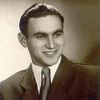


Rudolf "Rudi" Vrba (born Walter Rosenberg; 11 September 1924 – 27 March 2006) was a Slovak-Jewish biochemist who, as a teenager in 1942, was deported to the Auschwitz concentration camp in German-occupied Poland. He became known for having escaped from the camp in April 1944, at the height of the Holocaust, and for having co-written a detailed report about the mass murder that was taking place there.Distribution of the report by George Mantello in Switzerland is credited with having halted the mass deportation of Hungary's Jews to Auschwitz in July 1944, saving more than 200,000 lives. After the war Vrba trained as a biochemist, working mostly in England and Canada.
Vrba and fellow escapee Alfréd Wetzler fled Auschwitz three weeks after German forces invaded Hungary and shortly before the SS began mass deportations of Hungary's Jewish population to the camp. The information the men dictated to Jewish officials when they arrived in Slovakia on 24 April 1944, which included that new arrivals in Auschwitz were being gassed and not "resettled" as the Germans maintained, became known as the Vrba–Wetzler report. When the War Refugee Board published it with considerable delay in November 1944, the New York Herald Tribune described it as "the most shocking document ever issued by a United States government agency". While it confirmed material in earlier reports from Polish and other escapees,[a] the historian Miroslav Kárný wrote that it was unique in its "unflinching detail".
There was a delay of several weeks before the report was distributed widely enough to gain the attention of governments. Mass transports of Hungary's Jews to Auschwitz began on 15 May 1944 at a rate of 12,000 people a day. Most went straight to the gas chambers. Vrba argued until the end of his life that the deportees might have refused to board the trains, or at least that their panic would have disrupted the transports, had the report been distributed widely and sooner.
From late June and into July 1944, material from the Vrba–Wetzler report appeared in newspapers and radio broadcasts in the United States and Europe, particularly in Switzerland, prompting world leaders to appeal to Hungarian regent Miklós Horthy to halt the deportations. On 2 July American and British forces bombed Budapest, and on 6 July, in an effort to exert his sovereignty, Horthy ordered that the deportations should end. By then, over 434,000 Jews had been deported in 147 trains—almost the entire Jewish population of the Hungarian countryside—but another 200,000 in Budapest were saved.


