
Person attributes


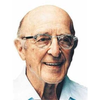
Carl Ransom Rogers (January 8, 1902 – February 4, 1987) was an American psychologist and among the founders of the humanistic approach (and client-centered approach) in psychology. Rogers is widely considered to be one of the founding fathers of psychotherapy research and was honored for his pioneering research with the Award for Distinguished Scientific Contributions by the American Psychological Association (APA) in 1956.
Early Life
Carl Rogers was born in 1902 in Oak Park, Illinois, a suburb of Chicago. He was the fourth of six children and grew up in a deeply religious household. He went to college at the University of Wisconsin-Madison, where he planned to study agriculture. However, he soon changed his focus to history and religion.
After earning his bachelor’s degree in history in 1924, Rogers entered the Union Theological Seminary in New York City with plans to become a minister. It was there that his interests shifted to psychology. He left the seminary after two years to attend Columbia University’s Teachers College, where he studied clinical psychology, completing his M.A. in 1928 and Ph.D. in 1931.
Psychological Career
While he was still earning his Ph.D. in 1930, Rogers became the director of the Society for the Prevention of Cruelty to Children in Rochester, New York. He then spent several years in academia. He lectured at the University of Rochester from 1935 to 1940 and became a professor of clinical psychology at Ohio State University in 1940. In 1945 he moved to the University of Chicago as a professor of psychology and then to his undergraduate alma mater, the University of Wisconsin-Madison in 1957.
Throughout this time he was developing his psychological perspective and formulating his approach to therapy, which he initially dubbed “nondirective therapy,” but is better known today as client-centered or person-centered therapy. In 1942 he wrote the book Counseling and Psychotherapy, where he proposed that therapists should seek to understand and accept their clients, because it is through such nonjudgmental acceptance that clients can begin to change and improve their well-being.
While he was at the University of Chicago, Rogers established a counseling center to study his therapy methods. He published the results of that research in the books Client-Centered Therapy in 1951 and Psychotherapy and Personality Change in 1954. It was during this time that his ideas started gaining influence in the field. Then, in 1961 while he was at the University of Wisconsin-Madison, he wrote one of his most well-known works, On Becoming a Person.

1966: Psychiatrist Carl Rogers (2R) leading a panel discussing mental health issues. The LIFE Picture Collection/Getty Images / Getty Images


