

Battle of Guardians Battle of Guardians
Battle of Guardians is an NFT fighting game that allows users to utilize their NFT assets to fight against computers or other players. Read more about this project on Battle of Guardians

Battle of Guardians' Share (BGS) is a native utility token of the project that can be used for: *Purchasing NFT Asset in Marketplace *Staking mechanism in staking pool *Governance votes to determine the development of the game as well as other in-game assets.
Inspired by a popular fighting game like Street Fighter and Tekken, Battle of Guardians gives players the ability to collect, rent, battle, and trade token-based characters called Fighters.
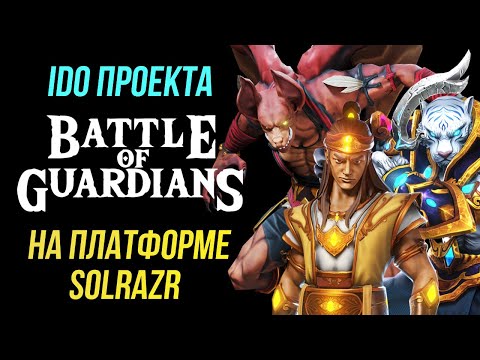
The Fighters in Battle of Guardians are divided into three different races: Guardians, Demons, and Humans.


Deactivated Topic
 Allbridge
Allbridge
Allbridge is a modular and expanding token bridge with on-chain consensus.

It’s a simple, modern, and reliable way to transfer assets between blockchain networks. Allbridge mission is to make the blockchain world borderless and provide a tool to freely move assets between different networks. In the future it will evolve into a DAO-style multi-chain hub, establishing connections between the EVM and non-EVM networks.
All the tokens are allowed
Everybody can add a token to the Allbridge via our special interface. Users and holders can stake our token, add theirs and give the holders the ability to move it to the different blockchains.
On-chain consensus
What makes Allbridge so unique is the fact that it uses an on-chain consensus. Typically, a bridge consists of a smart contract, a network of oracles, and a smart contract on the destination blockchain used to accept the input from active oracles and mint new tokens to the recipients. However, it is our belief that oracle (or validator) consensus should be reached on-chain. This is exactly why the proof of concept launches first on Solana, as on-chain consensus would require a fast blockchain with tolerable transaction fees.
System transparency
In addition to stability, on-chain consensus provides overall system transparency. Every validator transaction for every transfer can be verified with the help of a regular block explorer, and, if something goes wrong, it can be identified immediately. A separate block explorer will be implemented to monitor bridge transfers.

Modular architecture
Not all blockchains are created equal. Some are not so widespread, the others are quite expensive to operate. All are welcome to Allbridge. Validators can pick and choose which blockchain they want to support. Blockchains can incentivize validators for better coverage.
Single-signature method
While a majority of validators have to confirm bridge transactions, only one signature from one validator is enough to make a transfer. This is achieved by validators checking not only incoming but also outgoing transactions in the networks they support.
Validators flexibility
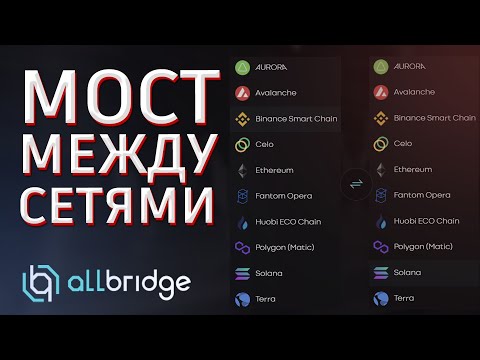
Usually, multi-chain bridges fall into a trap of requiring every validator to monitor all the supported blockchains. This leads to great inflexibility, since adding a new blockchain requires the support of all validators. Instead, a different approach was chosen, where validators are offered the right to decide which blockchains they support. This way they can rely on their unique technical expertise and focus on blockchains they find most important.
Activity monitoring
Allbridge also uses activity monitoring to generate periodical reports to the system’s contract, tracking the support of a selected blockchain by validators. This way, the number of active validators for every blockchain can be aggregated to identify the majority needed to support it.


Allbridge
Allbridge is a modular and expanding token bridge with on-chain consensus.
 Moonlana
 DeltaFi
 Solend

